Entertainment
“Stop Calling Me OBO’s Wife”: Sophia Momodu Draws a Clear Line as Online Pressure Over Davido Intensifies
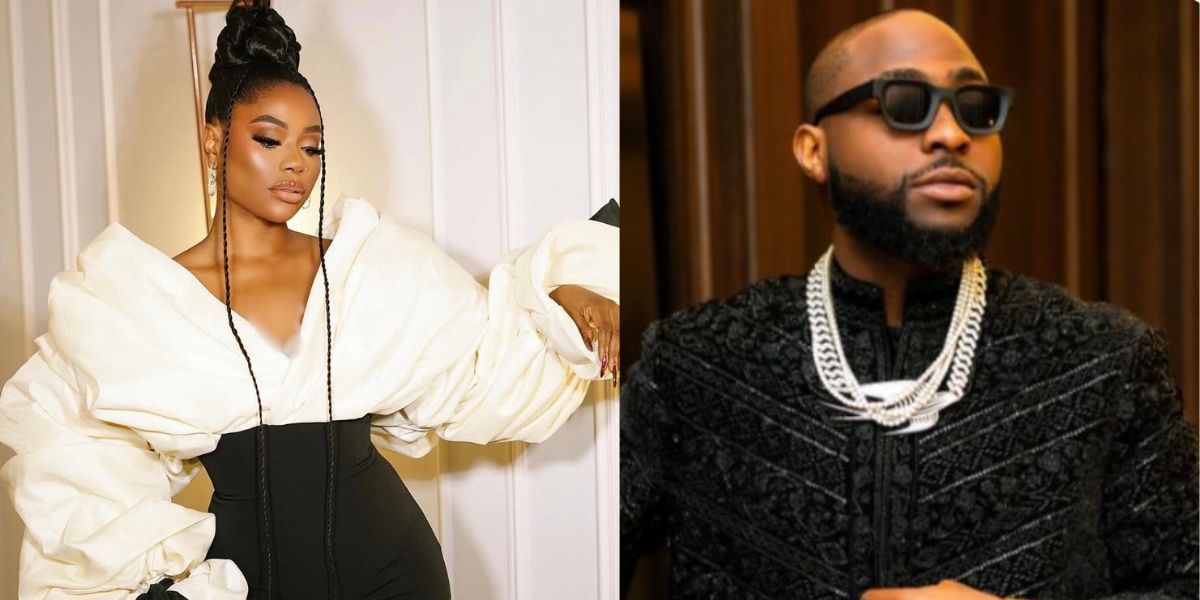
Sophia Momodu has issued a firm and unmistakable warning to fans and social media users, asking them to stop referring to her as “OBO’s wife,” a nickname tied to Nigerian music superstar Davido. The lifestyle entrepreneur and mother of one made the statement after repeated comments under her posts continued to link her identity to the singer, despite the fact that Davido is married and she has consistently kept her private life separate from his public persona. Her response, brief but pointed, has since ignited widespread conversation across Nigerian social media, reigniting debates about boundaries, respect, and the treatment of women connected to powerful male celebrities.
The comment that triggered her reaction appeared under one of her recent social media posts, where a follower casually addressed her as Davido’s wife, using the singer’s popular moniker, OBO. Rather than ignore it, Sophia chose to respond directly, making it clear that the label was inaccurate and unwelcome. Her words were not wrapped in humor or ambiguity; they were a stern correction aimed at shutting down a narrative she says she has never endorsed. Within hours, screenshots of her response began circulating, drawing thousands of reactions from fans, critics, and commentators alike.
Sophia Momodu has long been a familiar name in Nigerian pop culture, largely because of her past relationship with Davido and the fact that they share a daughter. Over the years, she has attempted to carve out an identity independent of that association, focusing on her work, lifestyle brand, and role as a mother. Yet, as with many women linked to high-profile men, public perception has often refused to let go of the past. Her latest statement suggests a growing frustration with being continually defined by a relationship that no longer exists in the way fans imagine it.
The timing of her warning is also significant. Davido’s marriage and highly publicized personal life have kept him in the headlines, and any mention of women previously linked to him tends to attract intense scrutiny. For Sophia, this has meant years of unsolicited commentary, assumptions, and labels imposed by strangers online. By saying “stop calling me OBO’s wife,” she was not only correcting a false title but also asserting ownership of her identity in a digital space where narratives can quickly spiral out of control.
Reactions to her statement have been sharply divided. Supporters have applauded her for standing her ground and demanding respect, noting that it is unfair and disrespectful to continue attaching a married man’s name to another woman. Many argued that her response was long overdue and praised her for finally drawing a clear boundary. They pointed out that Nigerian social media often struggles with respecting women’s autonomy, especially when fame and male celebrity are involved, and saw her warning as a necessary pushback against that culture.
On the other hand, critics accused Sophia of being overly sensitive or suggested that public figures should expect such comments as part of life in the spotlight. Some argued that her connection to Davido is a matter of public record and therefore inevitable in online discussions. A few even attempted to downplay her message, claiming fans meant no harm. However, others quickly countered that intent does not erase impact, especially when the same label is repeated over and over despite clear objections.
The conversation has also sparked broader discussions about co-parenting in the public eye. Sophia and Davido’s shared responsibility as parents has often been dragged into public debate, sometimes unfairly. Her insistence on not being called his wife highlights the delicate balance faced by individuals who must navigate private family dynamics under constant public observation. It underscores the reality that co-parenting does not equal romantic involvement, and certainly does not justify rewriting someone’s marital status to fit fan narratives.
For Sophia, the issue appears less about Davido himself and more about how society treats women associated with powerful men. Being called “OBO’s wife” erases her own achievements and reduces her identity to a role she does not occupy. In many ways, her warning reads as a demand to be seen as an individual, not an extension of someone else’s fame. It also serves as a reminder that social media comments, however casual they may seem, can reinforce harmful assumptions.
This is not the first time Sophia Momodu has spoken up about online behavior. In the past, she has addressed issues ranging from motherhood to mental health and the pressures of public scrutiny. Each time, her tone has suggested a desire for honesty and self-definition, even when it invites backlash. Her latest statement fits into that pattern, signaling a woman increasingly unwilling to stay silent while others define her story.
The ripple effect of her words continues to spread, with influencers, bloggers, and everyday users weighing in on the matter. Some see it as a teachable moment about respecting boundaries, while others treat it as just another episode in Nigeria’s never-ending celebrity discourse. Regardless of where opinions fall, the message itself is clear and difficult to misinterpret. Sophia Momodu does not want to be called Davido’s wife, and she wants that line respected.
In a digital culture where virality often rewards provocation over empathy, her stern warning stands out for its simplicity. It was not a long rant or a dramatic call-out, but a straightforward correction aimed at reclaiming her narrative. As the conversation continues, it raises important questions about how fans engage with public figures, how women assert autonomy in the face of persistent labeling, and whether online communities are willing to listen when someone says “enough.”
Ultimately, Sophia’s statement may be remembered less for the controversy it stirred and more for what it represents: a clear assertion of identity in a space that constantly tries to blur it. In telling fans to stop calling her “OBO’s wife,” she was not just correcting a comment; she was reminding the public that titles matter, boundaries matter, and respect should not be optional, even in the fast-moving world of social media gossip.
Popular Posts
Yahaya Bello Declares 2027 Senate Ambition Amid Ongoing ₦80.2bn EFCC Trial
30 Dec, 2025
Fire From the Sky: Nigerian Army Confirms Heavy Blow to Lakurawa After U.S.-Led Airstrikes in Sokoto
30 Dec, 2025
“Send Them to Sambisa” — Shehu Sani’s Fiery Comment Ignites Fresh Debate on How Nigeria Should Confront Terrorism
30 Dec, 2025Scroll to Top