news
Fire From the Sky: Nigerian Army Confirms Heavy Blow to Lakurawa After U.S.-Led Airstrikes in Sokoto
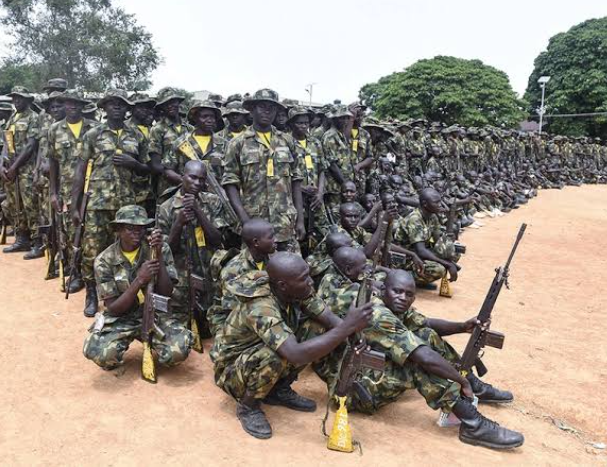
The Nigerian Army has confirmed what it describes as a major operational breakthrough against the Lakurawa insurgent group following a United States military–led airstrike on terrorist hideouts in Tangaza Local Government Area of Sokoto State, marking one of the most significant recent developments in the country’s fight against insurgency in the North-West.
The confirmation comes amid widespread public debate triggered by reports that the U.S. military launched at least twelve Tomahawk missiles on Thursday, December 25, targeting suspected Lakurawa positions across parts of Sokoto. The rare foreign military involvement immediately drew national and international attention, with security experts, analysts, and citizens questioning both the scale and effectiveness of the operation.
According to the Nigerian Army, however, doubts surrounding the strikes are misplaced. In a statement released on Monday, the Acting Director of Army Public Relations, Colonel Appolonia Anele, firmly dismissed claims that the missiles struck non-strategic or empty locations. She stated that intelligence-backed coordination between Nigerian troops and the United States Africa Command, AFRICOM, led to the successful destruction of multiple Lakurawa terrorist camps.
Colonel Anele explained that troops of Combat Intelligence Battalion VII had been tracking heightened terrorist movements along the Kaurau axis in Tangaza Local Government Area. Acting on what she described as “credible and actionable intelligence,” Nigerian forces engaged U.S. counterparts to conduct precision strikes on identified insurgent camps within the Bauni Forest, a known enclave used by Lakurawa fighters for logistics, planning, and movement.
The targeted locations, she said, were situated near Waria and Alkassim villages, areas that have repeatedly appeared in intelligence reports as transit and hideout zones for the group. The strikes were executed on December 25, while follow-up patrols were carried out the following day to assess the impact on the ground.
According to the Army’s findings, the patrols confirmed extensive damage to terrorist infrastructure, including camps believed to house fighters and store supplies. Colonel Anele noted that the destruction of these facilities significantly degraded the operational capacity of the Lakurawa insurgents, disrupting their ability to plan, coordinate, and launch attacks in the region.
“The operation achieved its intended objective,” the statement read, emphasizing that the airstrikes were not symbolic but part of a broader, intelligence-driven campaign to dismantle terrorist networks operating in Nigeria’s North-West. The Army stressed that the collaboration demonstrated the effectiveness of joint operations when credible intelligence is combined with precision capabilities.
The Lakurawa group has emerged in recent years as one of several violent actors exploiting porous borders, forested terrain, and local grievances across parts of Sokoto and neighboring states. Their activities, often overlapping with banditry and extremist violence, have contributed to persistent insecurity, displacement of communities, and economic disruption in rural areas.
News of the U.S.-led strike initially sparked mixed reactions across Nigeria. While some citizens welcomed the development as a sign of renewed seriousness in tackling insecurity, others questioned whether foreign involvement signaled weaknesses in Nigeria’s own military capacity. Security analysts also debated whether long-range missiles were necessary or effective against mobile insurgent groups often embedded in difficult terrain.
The Army’s response appears aimed at countering such narratives. By providing specific details about troop involvement, intelligence gathering, and post-strike assessments, military authorities are seeking to reassure the public that the operation was neither random nor wasteful. Officials insist the strikes were part of a carefully planned effort targeting confirmed terrorist positions rather than speculative locations.
Beyond the immediate tactical gains, the operation carries symbolic weight. It underscores Nigeria’s willingness to deepen international military cooperation in addressing complex security threats, particularly in regions where insurgent groups exploit geography and cross-border movement. It also signals a growing emphasis on intelligence-led operations, a shift many analysts have long argued is essential for sustained success.
Residents of communities around Tangaza have reported heightened military presence since the strikes, with patrols intensified to prevent insurgents from regrouping or retaliating. While the Army has not released casualty figures or further operational details, it maintained that ongoing surveillance and ground operations are in place to consolidate the gains achieved.
For communities that have endured years of fear and uncertainty, the confirmation of successful strikes offers a measure of cautious optimism. Local leaders have repeatedly called for decisive action against armed groups operating in forest reserves, arguing that insecurity has crippled farming, trade, and daily life. The Army’s statement suggests that security forces are increasingly focused on denying insurgents safe havens rather than merely responding to attacks.
At the national level, the incident has reignited discussions about the evolving nature of Nigeria’s security challenges and the tools required to confront them. As insurgent groups adapt and spread beyond traditional hotspots, military planners face mounting pressure to deploy advanced technology, strengthen intelligence networks, and maintain public confidence.
The Nigerian Army concluded its statement by reaffirming its commitment to protecting lives and property, assuring citizens that operations against terrorist groups would continue with renewed intensity. It also urged the public to support security efforts by providing timely and credible information, stressing that intelligence from local communities remains a critical component of success.
As the dust settles over the Bauni Forest and surrounding villages, attention now turns to whether the reported degradation of Lakurawa’s capabilities will translate into lasting security improvements on the ground. For now, the Army’s confirmation of major gains marks a notable moment in Nigeria’s ongoing battle against insurgency, one that highlights both the challenges ahead and the possibilities of coordinated, intelligence-driven action.
Popular Posts

Tragedy in Ogun: Anthony Joshua Crash Victims Identified as Close Friend and Trainer
30 Dec, 2025
A Nation in Mourning: President Tinubu Reaches Out to Anthony Joshua After Tragic Lagos–Ibadan Expressway Accident
30 Dec, 2025
Fake Protection, Real Danger: NAFDAC Raises Alarm as Counterfeit K+ss Condoms Flood Nigerian Markets
30 Dec, 2025Scroll to Top