Entertainment
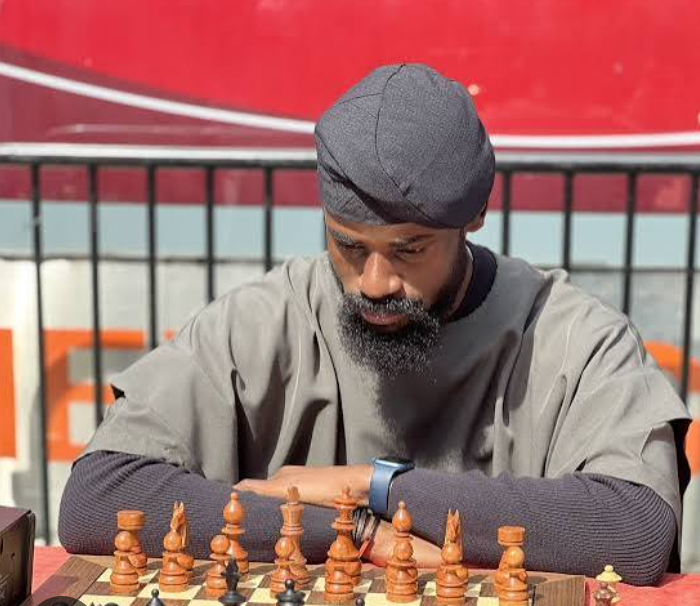
The Regret That Echoes Beyond the Chessboard: Tunde Onakoya’s Honest Confession Sparks National Conversation
Chess champion and global education advocate Tunde Onakoya has never been afraid to speak his truth, but his newest revelation has struck a different kind of chord—one that reaches far beyond his celebrated career and straight into the heart of Nigeria’s long-standing academic culture. In a moment of rare vulnerability, the Guinness World Record holder shared one of his deepest regrets, and the simplicity of his words has ignited a wave of reflection across the country.
Onakoya, whose rise from the slums of Ikorodu to international acclaim has become a symbol of hope for millions, revealed that his greatest disappointment wasn’t a failure, a loss, or a missed opportunity in chess—it was the moment his secondary school teachers decided his entire future for him. According to him, he was convinced as a teenager that Art class was for the “dullards,” while only the “smartest students” were meant for Science. It was a narrative many Nigerian students grew up hearing, but for Onakoya, that forced choice changed the direction of his life before he understood what direction meant.
He shared that he had always loved words, excelled at debates, and dreamed of becoming a lawyer. But the system would not allow him to choose differently. The teachers, the environment, and the stereotypes assigned to academic tracks created a pressure that overpowered his own desires. “They made that choice for me before I understood what it meant,” he wrote, adding that he is certain the same fate affected countless Nigerian children whose talents never fit neatly into the boxes the educational system provided.
For many Nigerians who stumbled upon his post, the confession wasn’t just relatable—it was painfully familiar. Generations of students have grown up with the rigid belief that the Science class is reserved for the “intelligent,” the “serious,” and the “future leaders,” while the Arts is often treated as a dumping ground for the academically “weak.” The consequences of this mindset have rippled across the nation for decades, influencing not just careers but confidence, passions, and the sense of self-worth that shapes adulthood.
What makes Onakoya’s reflection stand out is the fact that it comes from someone who has excelled globally in a field considered deeply intellectual. His achievements in chess, a discipline that requires analytical thinking, strategic planning, memory, and emotional endurance, should have been the ultimate proof that brilliance has no subject label. Yet here he is, openly acknowledging that even he—now a global name—was almost made to believe he wasn’t suited for a path he genuinely desired because of an outdated academic hierarchy.
His honesty has triggered a national conversation, with many Nigerians recounting their own versions of the same story. Some shared memories of being forced into Science despite excelling in Literature or Government. Others admitted that they were discouraged from creative careers because they were branded “too smart” to be in Art class. For many, the regret is still fresh; for others, it is buried under decades of decisions they never truly made for themselves.
But Onakoya’s story isn’t just about regret—it’s about the emotional and psychological cost of a system that fails to see the individuality of its students. In a country where many schools prioritize reputation over nurturing talent, children often grow up believing that being placed in Science is a badge of honor, while being in Arts is a stain. With such perceptions shaping countless young minds, Nigeria has inevitably lost potential writers, lawyers, linguists, historians, and creatives who could have flourished if they were simply allowed to follow their natural gifts.
Educators and parents have weighed in as well, acknowledging the damaging impact of this outdated ideology. Several teachers who responded to his post admitted that they, too, once perpetuated the belief because it was embedded in the system long before they joined it. Others expressed concern that the narrative is still present today, especially in public schools where career counselling is almost nonexistent and students are streamed without proper assessment or guidance.
Yet, the irony is striking: while Nigeria consistently pushes its brightest into Science, the nation still struggles with a shortage of opportunities in STEM fields, leaving many graduates jobless or underemployed. Meanwhile, the creative industry—driven by writers, artists, actors, designers, and storytellers—has grown into a global powerhouse, contributing significantly to the nation’s identity and economy. The very fields once dismissed as “for dullards” are now among the most economically vibrant and culturally influential sectors in Africa.
Onakoya’s reflection forces the country to confront the reality that intelligence is not singular and talent is not uniform. A student skilled in debate, writing, or logic is not inferior to one who excels in physics or mathematics. His statement is a reminder that the gifts that shape a person’s destiny are often suppressed when adults impose their own biases and expectations onto children. And those consequences don’t disappear with age—they linger, resurfacing as regret, what-ifs, and missed passions.
However, while Onakoya admits that the system altered his trajectory, it’s impossible to ignore the extraordinary path he eventually carved out for himself. He found purpose in chess, built an internationally recognized nonprofit, and now uses his influence to advocate for children's education and empowerment. Perhaps he never became the lawyer he once dreamed of being, but he became something arguably greater: a voice capable of challenging the same system that once silenced his choices.
His story serves as both a caution and an inspiration. It warns of the dangers of limiting children through stereotypes, but it also shows the resilience of human potential—the way passion can survive even when buried, and how purpose can emerge even when paths are diverted. His journey is a testament to the fact that brilliance cannot be boxed, labeled, or assigned. It finds its way into the world, one way or another.
In sharing his regret, Tunde Onakoya has unintentionally sparked a collective awakening. His words have reminded the nation that children deserve the right to choose, the right to explore, and the right to grow without prejudice. They deserve educators who guide rather than dictate, parents who listen rather than assume, and systems that nurture rather than limit. And perhaps, in voicing his regret, he has opened the door for future generations to experience the freedom he was denied.
For Nigeria, the challenge now is clear: to build an educational culture where a child’s passion is celebrated, not judged; where Art is not mocked, and Science is not glorified at the expense of creativity; where every student is seen, heard, and understood. Only then can the nation truly cultivate the brilliance it so desperately seeks.

Tunde Onakoya’s confession may have been rooted in regret, but its impact is shaping a new kind of hope—a hope that future Nigerian children will grow up understanding that their talents are valid, their passions are powerful, and their choices are their own.
Popular Posts
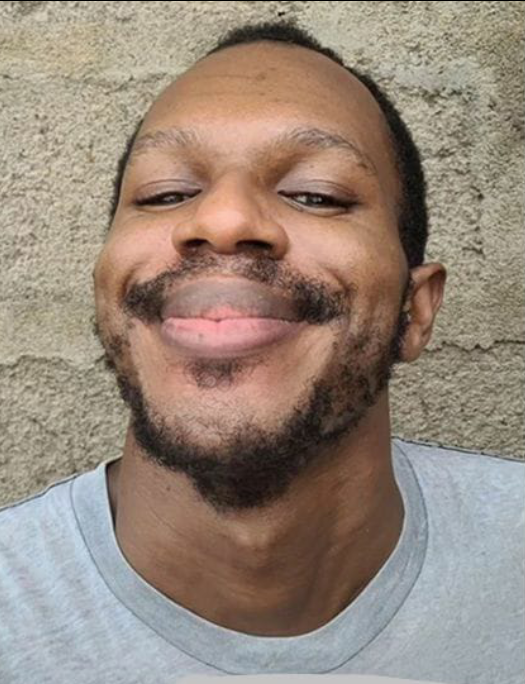
“Stick to Makeup, Sis”: Daniel Regha’s Fiery Clapback at Tacha Sparks Heated Debate Online
12 Dec, 2025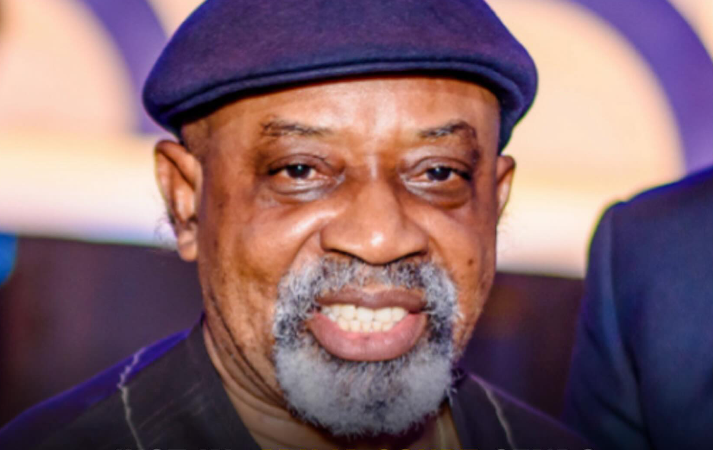
Kuje Nights Begin: Abuja Court Orders Former Labour Minister Chris Ngige Remanded Over Alleged ₦2.2bn Contract Fraud
12 Dec, 2025
“Even the Privileged Are Tired”: Kiddwaya’s Viral Lament Sparks Nationwide Reactions
12 Dec, 2025Scroll to Top