Entertainment
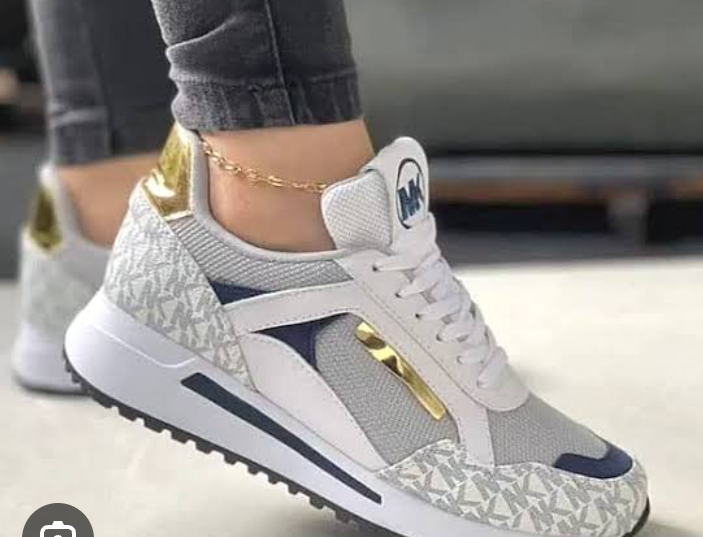
“The War on Fake Sneakers: How One Tweet Sparked a Bigger Conversation About Class, Image, and the Pressure to Look ‘Real’”
It started like many online debates do these days: a simple tweet, tossed casually into the digital space, the kind meant to gather a few nods of agreement and maybe a handful of jokes. But the reaction that followed proved once again that nothing is ever truly simple on social media—especially when the topic touches the intersection of pride, money, and the unspoken rules of social status.
Michael, known on X as @bustacrimes1, posted a short but sharp opinion that instantly lit up timelines: “Don't wear fake shoes round me man. Especially when the original is dirt cheap. Wdym you're wearing fake Vans or Sambas.” It was the kind of statement that carried the certainty of someone who firmly believed they were right, and the tone of someone who expected others to agree. But the internet had other plans.
Almost immediately, another user, @khanofkhans11_, fired back with a response that cut through the noise: “Around me as per. You people are not real.” In just a few words, he flipped the argument on its head—not only defending those who wear what they can afford, but implying that the obsession with “authenticity” and branding has spiraled into something performative and unnecessary.
And with that, the debate was born.
What followed was a wave of hot takes, think pieces, and personal testimonies. People chimed in from every corner of the app—students still struggling to pay rent, fashion lovers who’ve watched sneaker culture become almost militarized, influencers who built brands around authenticity, and everyday Nigerians who know the pressure of trying to look polished in a country where the cost of living keeps climbing.
For many, the initial tweet struck an all-too-familiar nerve. The unspoken rule among certain circles—don’t be caught wearing fake anything—has grown louder in recent years. Social media visibility has made people far more conscious of what they wear, where they stand, and how they present themselves. And it’s not unusual for this pressure to fall hardest on those who can’t afford the originals yet still want to feel included or stylish.
But the more people discussed it, the clearer it became that the issue wasn’t just about shoes. It was about identity, ego, and the shifting ways we define “realness.”
Some users agreed with Michael’s stance, arguing that if someone wants the aesthetic of a particular brand, they should be willing to pay for it—especially when the originals of some styles, like Vans or Adidas Sambas, are relatively accessible compared to luxury brands. Their argument was simple: instead of buying a counterfeit version, choose a different, affordable brand entirely. “There are so many cheap, clean sneakers out there,” one commenter wrote. “Why wear something that pretends to be something else?”
But the opposing camp, louder and perhaps more grounded in the realities of everyday life, pushed back harder.
They questioned the moral outrage directed at people who buy fakes. They pointed out the class implications—the idea that someone should feel embarrassed or looked down on because they can’t justify spending ₦20,000 or ₦30,000 on footwear. They reminded everyone that inflation has made even “cheap” items feel like luxuries for many households. They argued that fashion has always been about expression, not policing.
One user commented, “You people are fighting over shoes when some folks are fighting to survive.” Another added, “Imagine gatekeeping sneakers in 2025. Everybody just dey try.”
The debate quickly branched out into wider discussions about economic hardship, the rise of dupes and replicas in global markets, and the unspoken elitism that sometimes hides in conversations about clothing. For some, the insistence on authenticity is a reflection of self-respect. For others, it is simply an extension of classism dressed as preference.
The argument also forced many to confront the uncomfortable reality that fake products have always thrived in environments where the desire to belong is stronger than the ability to pay the price of admission. And with mainstream brands becoming status symbols, the line between personal choice and societal pressure becomes blurry.
But perhaps the most interesting part of this viral moment wasn’t the back-and-forth—it was how quickly people began sharing personal stories. One young man admitted he once wore knockoff sneakers to secondary school and was bullied until he saved up for “real ones.” A woman confessed she used to buy replicas but stopped after getting humiliated at a party. Someone else admitted they still wear fakes when necessary because looking neat matters more to them than a brand name.
As the tweet continued circulating, it also highlighted a generational divide. Older commenters remembered a time when nobody cared about labels. All that mattered was that your shoes were clean and didn’t embarrass you in public. But younger users—those raised on Instagram aesthetics, curated outfits, and influencer culture—see authenticity as a badge of honor.
And yet, for all the heated takes and playful dragging, @khanofkhans11_’s response remained the anchor of the conversation. By saying “You people are not real,” he redirected the scrutiny away from those wearing fake shoes and toward those enforcing a rigid definition of what it means to be “real” in the first place. He challenged the assumption that your value could be tied to your ability to buy a particular brand. He reminded everyone that authenticity is more than a label stitched onto a sneaker tongue.
In the end, the debate encapsulated the modern Nigerian fashion conversation in miniature: pride, pressure, sarcasm, hustle, and the constant tug-of-war between wanting to belong and wanting to be yourself. It exposed how something as simple as footwear can become a symbol of larger societal expectations. Most importantly, it reminded everyone that behind every pair of shoes—fake or real—is a person simply trying to live, express, and survive in a world that constantly demands more.
The viral moment eventually quieted down, as all trends do. New topics took over the timeline. But the conversation it sparked continues to linger. The next time someone instinctively judges another’s outfit, or the next time someone hesitates before putting on a pair of sneakers they like but didn’t buy at a name-brand store, this debate will echo quietly in the background.
At the core of it, the message became simple: wearing fake shoes doesn’t make someone any less “real.” But policing others just might.
And if social media has taught us anything, it’s that authenticity isn’t something you wear on your feet—it’s something you carry within.
Popular Posts

Scroll to Top