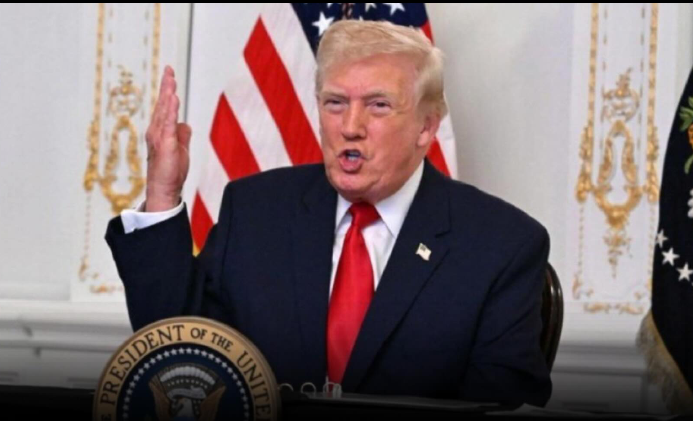
In a move signaling a major recalibration of American foreign policy, President Donald Trump has recalled the United States’ ambassador to Nigeria, Richard M. Mills Jr., as part of a wide-ranging diplomatic reshuffle that is expected to affect 30 senior envoys around the world. The announcement comes amid growing speculation that Trump intends to assert a more aggressive “America First” approach in international relations, particularly in regions where US strategic interests intersect with emerging economic and security concerns. Ambassador Mills, who was appointed to the Nigerian post on July 25, 2024, has been a key figure in fostering bilateral ties between the United States and one of Africa’s largest economies. His tenure, though relatively brief, coincided with critical developments, including expanding trade partnerships, counterterrorism initiatives, and collaborations on regional security challenges.
Sources within Washington describe the reshuffle as one of the most significant personnel changes in recent US diplomatic history. Thirteen ambassadors serving across African nations are among those affected, signaling a possible recalibration of the United States’ engagement with the continent. For many observers, the move underscores the Trump administration’s intent to consolidate control over key foreign policy positions, replacing diplomats appointed during previous administrations with individuals who align closely with the president’s strategic priorities. While officials maintain that the shakeup is a routine exercise in the exercise of presidential authority, the scale of the action has prompted speculation about the long-term implications for US diplomacy in Africa and beyond.
According to the Associated Press, diplomats impacted by the announcement, many of whom were originally appointed under the Biden administration but retained temporarily by Trump, were informed last week that their postings would end in January 2026. The decision, insiders say, was designed to provide ample notice and a transition period while allowing for the incoming appointees to prepare for their assignments. “Ambassadors serve at the pleasure of the president,” a senior official familiar with the development told AP, emphasizing that envoys typically serve three to four years before rotation. Nonetheless, the timing and breadth of the reshuffle suggest a deliberate effort to ensure that key diplomatic positions are occupied by figures aligned with the administration’s vision for US global engagement.
In Nigeria, Mills’ departure is expected to have significant diplomatic ramifications. During his tenure, the ambassador played a critical role in strengthening bilateral relations, supporting initiatives on economic growth, energy cooperation, and regional security. Nigeria, Africa’s most populous nation and one of its largest economies, has been a strategic partner for the United States in promoting stability across West Africa. From tackling insurgent groups such as Boko Haram to advancing trade agreements and investment opportunities, the US-Nigeria relationship has been closely linked to regional security and economic development. Diplomatic sources suggest that the incoming appointee will face the challenge of maintaining continuity in these efforts while navigating a shifting geopolitical landscape.
The broader international community has been paying close attention to the implications of Trump’s diplomatic shakeup. With ambassadors in 30 countries worldwide affected, including key postings in Europe, Asia, and Africa, the move is being interpreted as part of a broader realignment intended to ensure that US diplomacy reflects the president’s priorities. Analysts note that the Trump administration is likely seeking to accelerate decision-making and strengthen loyalty within the ranks of the diplomatic corps, potentially at the expense of continuity and institutional knowledge that long-serving diplomats provide. The recall of ambassadors previously appointed by the Biden administration further highlights the political dimension of the reshuffle, raising questions about the impact on long-standing partnerships and multilateral agreements.
Domestically, the move has sparked debate among policymakers, scholars, and former diplomats. Supporters argue that it demonstrates decisive leadership and an effort to align US foreign policy with strategic objectives, while critics caution that frequent changes in ambassadorial posts can disrupt ongoing projects, delay international cooperation, and create uncertainty among host countries. The reshuffle also underscores the centrality of ambassadorial appointments in shaping foreign relations, as envoys serve not only as representatives of the United States but also as key facilitators of dialogue, trade, and security collaboration. In Africa, where the US has historically sought to balance diplomatic engagement with counterterrorism efforts, development assistance, and trade promotion, the timing and scale of the personnel changes are being closely monitored.
Trump’s decision reflects a broader pattern of reevaluating diplomatic posts to align with an assertive, priority-driven foreign policy. Insiders suggest that the administration is placing increased emphasis on appointments that combine political loyalty with expertise in areas critical to US interests, including economic development, energy security, and counterterrorism. The reshuffle, according to analysts, may also signal a willingness to depart from traditional diplomatic norms, prioritizing a more hands-on approach in managing international relationships. This strategy, while controversial, is consistent with Trump’s broader foreign policy philosophy, which favors direct engagement, transactional diplomacy, and a recalibration of alliances in line with perceived national interests.
As the diplomatic community prepares for the transition, questions remain about the potential consequences for ongoing US initiatives in Nigeria and other affected nations. In Nigeria, Ambassador Mills’ departure is likely to necessitate rapid adjustments within the embassy, including the reassignment of responsibilities and the continuity of high-priority programs. Observers note that while institutional structures within embassies are designed to absorb such changes, the personal relationships cultivated by ambassadors with local leaders, business communities, and civil society organizations are often irreplaceable. Maintaining momentum on key initiatives, including trade agreements, security cooperation, and development programs, will be a critical test for the incoming diplomat.
International reaction to the announcement has been muted but cautious, with analysts highlighting the importance of clear communication and continuity in US foreign policy. While Washington insiders stress that the reshuffle is within the president’s authority and reflects a standard exercise of executive power, the breadth of the changes suggests a strategic recalibration with potential long-term implications. In Africa, where diplomatic stability is closely tied to economic and security outcomes, the transition period will be closely watched by both regional leaders and international partners.
Ultimately, the recall of Ambassador Richard M. Mills Jr. and the sweeping global reshuffle reflect a deliberate strategy by the Trump administration to consolidate control over US diplomacy and ensure alignment with the president’s foreign policy priorities. While the impact of these changes will unfold over the coming months, the move underscores the centrality of ambassadorial appointments in shaping international relations. As Washington and host nations navigate the transition, the world will be watching how this reshuffle influences the future of US engagement abroad, from Nigeria and Africa at large to the broader international stage. The administration’s focus on loyalty, alignment with policy objectives, and strategic positioning signals a new era in American diplomacy, one that emphasizes assertive management and the pursuit of national interests in an increasingly complex global environment.
Popular Posts
US to Partially Suspend Visas for Nigerians from January 1, 2026, Stirring Widespread Concern
23 Dec, 2025
Anthony Joshua Set to Lose $66m to Tax After $140m Miami Fight Payday
23 Dec, 2025
Trump Administration Rolls Out $3,000 Incentive for Undocumented Migrants to Self-Deport During Holiday Season
22 Dec, 2025Scroll to Top