The United States has announced a partial suspension of visa issuance for Nigerian nationals, a move that is already sending shockwaves through families, students, business owners and travel hopefuls across Nigeria. The policy, which takes effect on January 1, 2026, follows a new presidential proclamation aimed at strengthening US border controls and national security, and places Nigeria among 19 countries affected by the sweeping measure.
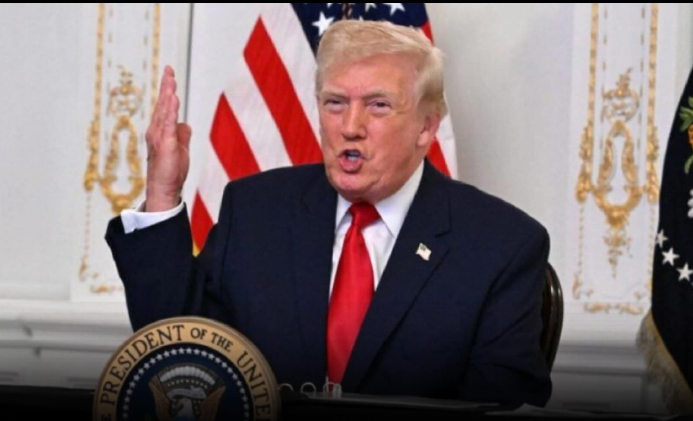
In a statement released on Monday, the US Mission in Nigeria confirmed that the restriction will begin at exactly 12:01 a.m. Eastern Standard Time, in accordance with Presidential Proclamation 10998, titled “Restricting and Limiting the Entry of Foreign Nationals to Protect the Security of the United States.” The proclamation introduces limits on the entry of certain foreign nationals and significantly alters visa access for citizens of listed countries, including Africa’s most populous nation.
According to details provided by US authorities, the suspension will apply to several widely used visa categories. These include nonimmigrant B-1 and B-2 visas, which are commonly issued for business and tourism purposes, as well as F, M and J visas that cover students and exchange visitors. The proclamation also extends to specific immigrant visa categories, although officials emphasized that the immigrant visa restrictions will be subject to limited exceptions.
The announcement has generated intense interest in Nigeria, where thousands of people apply for US visas each year for education, medical care, business engagements, tourism and family visits. For many young Nigerians, especially students aspiring to study in American universities, the inclusion of F and J visas has raised immediate concerns about future academic plans, scholarships and international exchange opportunities.
US officials were quick to clarify that the suspension is not a blanket ban on Nigerians. The US Mission stressed that several categories of travelers are exempt from the new restrictions. These exemptions include lawful permanent residents of the United States, commonly known as green card holders, as well as dual nationals traveling with passports from countries not affected by the proclamation. Also excluded are individuals eligible for Special Immigrant Visas due to employment with the US government, along with participants in select major international sporting events deemed to be in the national interest of the United States.
Importantly, the Mission underlined that the proclamation only applies to Nigerian nationals who are outside the United States on the effective date and who do not already possess a valid US visa as of January 1, 2026. “No visas issued before January 1, 2026, at 12:01 a.m. EST, have been or will be revoked pursuant to the Proclamation,” the statement said, offering reassurance to Nigerians who currently hold valid US visas or who are already living, studying or working in the country.
Despite this clarification, uncertainty remains for many prospective travelers. While Nigerians from affected countries may continue to submit visa applications and attend scheduled interviews at US embassies and consulates, the Mission cautioned that such applicants may ultimately be deemed ineligible for visa issuance or admission under the new rules. This means that the application process itself remains open, but approval is no longer guaranteed even for applicants who meet traditional eligibility requirements.
The policy has been framed by US authorities as part of a broader effort to protect national security and strengthen immigration controls. Presidential Proclamation 10998 cites concerns related to identity management, information-sharing practices, and compliance with US immigration laws by certain countries. While the full criteria used to determine the affected countries were not extensively detailed in the public statement, the inclusion of Nigeria has reignited debates about the country’s global image, governance challenges and diplomatic standing.
For Nigeria, the announcement adds to a growing list of recent US policy actions that have strained travel and migration pathways. In recent months, Nigerians have faced tighter visa validity rules, including shorter durations for certain nonimmigrant visas. The country has also been re-listed by the US under religious freedom concerns, a designation that carries diplomatic and reputational implications and may influence broader bilateral relations.
Reactions within Nigeria have ranged from disappointment to anxiety and frustration. Travel consultants report a surge in inquiries from clients seeking clarity on whether to expedite visa applications before the end of 2025. Parents are expressing worry about children planning to begin studies in the United States in 2026, while business owners fear disruptions to partnerships, conferences and investment opportunities that rely on frequent international travel.
Education advocates warn that the restriction on student and exchange visas could reduce academic collaboration between Nigerian and American institutions. Over the years, Nigerian students have consistently ranked among the top African student populations in the United States, contributing billions of dollars to the US economy through tuition, housing and living expenses, while also gaining skills and exposure that benefit Nigeria upon their return.
Analysts also point out the potential long-term effects on people-to-people ties between both countries. The United States and Nigeria share decades of cultural, educational and economic exchanges, supported by a large Nigerian diaspora community in America. Any policy that limits mobility, even partially, risks weakening these connections and deepening perceptions of exclusion among young Nigerians.
As January 1, 2026, approaches, attention will likely turn to whether diplomatic engagement can soften the impact of the proclamation or lead to Nigeria’s removal from the affected list. Historically, similar US restrictions have been reviewed and adjusted over time based on changes in policy, compliance and bilateral cooperation. For now, however, the proclamation stands as a significant development with far-reaching implications.
The US Mission in Nigeria has encouraged applicants to stay informed through official channels and to carefully review eligibility requirements before applying. While the door to the United States is not completely closed to Nigerians, it is set to become considerably narrower, marking a new chapter in US–Nigeria travel relations that many will be watching closely in the months ahead.
Popular Posts
US to Partially Suspend Visas for Nigerians from January 1, 2026, Stirring Widespread Concern
23 Dec, 2025
Anthony Joshua Set to Lose $66m to Tax After $140m Miami Fight Payday
23 Dec, 2025
Trump Administration Rolls Out $3,000 Incentive for Undocumented Migrants to Self-Deport During Holiday Season
22 Dec, 2025Scroll to Top