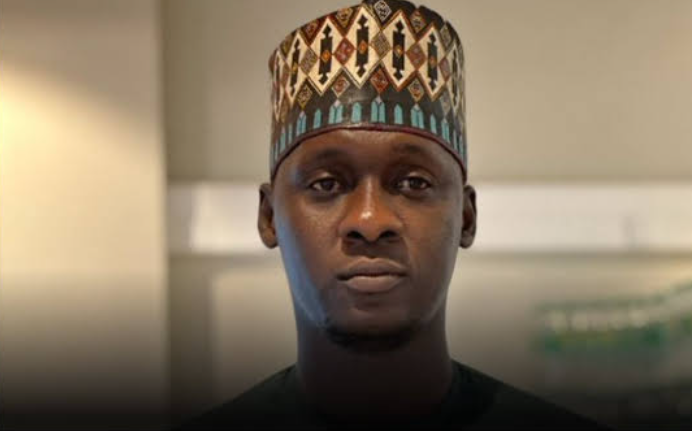
The new year has barely started, yet social media is already buzzing with one of the most bewildering trends of 2026: men randomly sliding into the DMs of women they don’t know and gifting them millions of naira. This phenomenon, which has left many scratching their heads, was recently highlighted by popular media personality Sarki, whose reaction has since gone viral across X (formerly Twitter) and other social media platforms.
In a post that quickly gained traction, Sarki expressed both astonishment and disbelief at the audacity of men who are willing to send huge sums of money to women they have never met. “The way some men move amazes me,” Sarki wrote. “Why would you DM a random girl you've never met or even spoken to and ask for her account number, then send her N500k or more? On my life, even if I become a billionaire, I’ll never DM a random girl and send her money. I'm not spid.” The post, shared on the morning of January 1, 2026, has racked up over 43,000 views within hours, igniting widespread debate online.
Sarki’s comments have sparked conversations about the growing culture of “DM gifting,” a term now being used to describe the practice of sending large sums of money to women online in the hope of attracting attention, flirtation, or even affection. While some see it as harmless generosity, others are raising serious concerns about its implications, particularly when it comes to consent, safety, and personal boundaries.
The trend, which seems to be accelerating with the rise of social media influencers and “baddies”—a term commonly used to describe attractive women with a strong online presence—has left many users questioning the motivation behind such actions. Experts in social behavior suggest that part of the reason men engage in this kind of giving is the influence of wealth display culture, where flaunting financial power is seen as a way to gain admiration or favor. On the flip side, critics argue that it creates unrealistic expectations and objectifies women, turning personal interactions into financial transactions rather than genuine connections.
Sarki’s reaction resonates with many social media users who find the phenomenon confusing and unsettling. Commenters on his post have been equally divided, with some expressing amazement at the generosity on display, while others are concerned about the risks involved. “This is insane! Who even does this?” one user wrote. Another countered, “It’s a dangerous trend. Imagine sending money to someone you don’t even know. Scams, theft, harassment—it’s a recipe for disaster.” The debate highlights the tension between admiration for financial boldness and the potential consequences of such unmediated generosity.
Interestingly, this trend is not unique to Nigeria. Across social media platforms globally, stories of people sending large sums of money to strangers—sometimes with the hope of forming romantic connections, sometimes for attention—have become more frequent. However, the scale and frequency of such interactions in Nigeria seem to be catching the public off guard, especially with men reportedly sending half a million naira or more to women they’ve never interacted with beyond the confines of a social media DM.
Sarki’s tweet also opens up broader questions about the role of social media in shaping perceptions of wealth and relationships. The ability to send money instantly via banking apps, coupled with the visibility of online lifestyles, has created an environment where financial gestures can carry as much weight as words or actions in personal interactions. Yet, as Sarki points out, not everyone is comfortable with this approach, and many question whether sending large amounts of money should ever replace genuine communication or meaningful relationship-building.
The response from the public has been swift and varied. Some women, often dubbed “baddies” online, have reportedly received such unsolicited gifts and shared their experiences, both to flaunt their sudden fortune and to warn others about potential pitfalls. Many express a mixture of surprise and discomfort, acknowledging the generosity while also questioning the intentions behind it. As one influencer reportedly stated, “It’s flattering, yes, but also weird. Why would someone I’ve never spoken to feel compelled to send me so much money?”
Financial experts and social commentators have weighed in as well, cautioning that while giving gifts is not inherently wrong, sending large sums of money to strangers carries real risks. Beyond potential scams, there are issues of emotional manipulation and boundary violations. Some experts suggest that this trend may also reflect deeper societal pressures, including the glorification of wealth and the assumption that financial power can equate to social or romantic success.
Sarki’s viral post, though lighthearted in tone, may also serve as a cautionary tale. By openly questioning the logic behind such actions, he is drawing attention to a behavior that, while increasingly common, is not without consequences. His stance emphasizes personal responsibility, encouraging both men and women to consider the implications of financial interactions on social media before engaging in them.
As this trend continues to unfold, the conversation shows no signs of slowing. Social media users are debating everything from the ethics of unsolicited gifts to the social psychology behind why men feel compelled to display wealth in this way. Meanwhile, influencers and ordinary users alike are navigating a landscape where messages in their DMs can carry both attention and danger in equal measure.
Ultimately, Sarki’s reaction highlights a growing awareness of the blurred lines between generosity, attention-seeking, and financial exploitation in the age of social media. It is a reminder that while money can open doors and make statements, it cannot replace authenticity, consent, or mutual respect in relationships, whether online or offline. In a world where a simple DM can lead to hundreds of thousands of naira changing hands, Sarki’s words echo a sentiment that many may share privately but few dare to voice publicly: some gestures, no matter how generous, are simply better left unmade.
For now, the “DM gifting” trend shows no signs of slowing down, and social media users will continue to watch, comment, and debate every new story that emerges. Whether it becomes a long-term cultural phenomenon or a passing craze remains to be seen, but Sarki’s post has already secured its place as a defining commentary on one of the most perplexing online behaviors of 2026. As Nigerians and global observers alike react to this strange intersection of wealth, social media, and desire, one thing is clear: when it comes to DMs and millions of naira, some things are better que
stioned than celebrated.
Popular Posts
“Shame!!” Skitmaker Two Glazzes Shares Embarrassing Public Moment After Crossover Service
02 Jan, 2026
“Black Stars to the World Cup Final?” Prophet Nigel Gaisie’s Bold 2026 Prediction Sparks Hope and Debate
02 Jan, 2026
“We’ve Chosen Peace”: Peller Confirms Split From Jarvis, Says They’re Friends as He Vows to Focus on Himself in 2026
02 Jan, 2026Scroll to Top