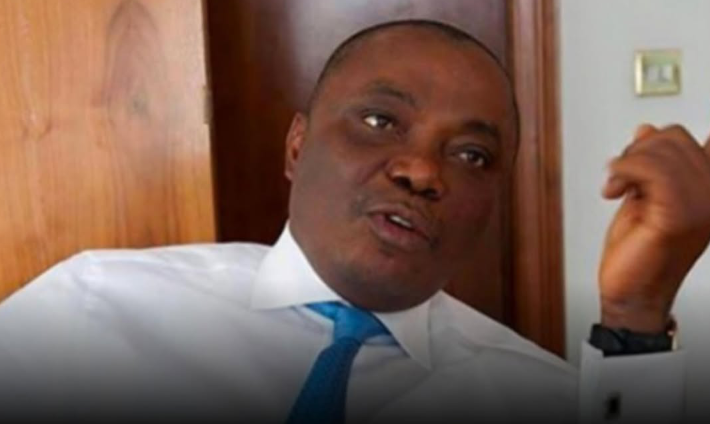
Nigeria’s political landscape was thrown into mourning following the passing of former Senator representing Delta North, Peter Onyelukachukwu Nwaoboshi, who died at the age of 68. The news of his death, which broke quietly but spread rapidly across political circles and social media, has left supporters, colleagues, and constituents grappling with a profound sense of loss. As of the time of reporting, details surrounding his death have not been officially disclosed, adding a layer of solemn reflection to an already emotional moment for the nation.
Nwaoboshi was widely regarded as a proud son of Delta State and a fearless advocate of the Anioma people, a role he embraced with passion throughout his political life. His death marks the end of an era for many in Delta North who saw him not just as a politician, but as a voice that consistently fought for recognition, equity, and development within the Nigerian federation. Tributes have continued to pour in from political leaders, party faithful, and ordinary citizens who credit him with courage, loyalty, and an unyielding commitment to public service.
Born and raised in Delta State, Peter Nwaoboshi’s journey into politics was shaped by a deep connection to his roots and an early understanding of the challenges facing his people. Over the years, he built a reputation as a grassroots politician who was unafraid to speak his mind, even when his views placed him at odds with powerful interests. Supporters often described him as blunt but sincere, a man whose loyalty to his constituents and political ideals outweighed personal comfort.
His time in the National Assembly remains one of the most defining chapters of his public life. As a senator representing Delta North, Nwaoboshi was an active participant in legislative debates and committee work, earning recognition for his strong positions on issues affecting the Niger Delta and minority regions. He notably served as Chairman of the Senate Committee on Niger Delta Affairs, a role that placed him at the center of discussions around development, environmental justice, and resource control in one of Nigeria’s most sensitive and strategic regions.
During his tenure as committee chairman, Nwaoboshi consistently emphasized the need for sustainable development in the Niger Delta, arguing that decades of oil exploration had left communities with environmental damage and inadequate infrastructure. He used his position to push for policies and interventions aimed at improving the living conditions of the people, while also calling for transparency and accountability in the management of intervention agencies. Colleagues recall that he approached the role with seriousness, often insisting that development efforts must translate into tangible benefits for ordinary citizens rather than remain on paper.
Beyond his legislative duties, Nwaoboshi’s influence within the Peoples Democratic Party was equally significant. He served twice as Chairman of the PDP in Delta State, a position that required political tact, resilience, and deep understanding of party dynamics. At different times, he was seen as a stabilizing force within the party, navigating internal disputes and working to maintain unity in a state known for its complex political structure. His leadership style within the party reflected his broader political identity—firm, principled, and unapologetically loyal to the PDP.
Those who worked closely with him often described him as a courageous leader who did not shy away from controversy. He was known for taking strong positions, even when they attracted criticism or legal battles. Yet, to his supporters, this was evidence of a man who believed deeply in his convictions and was willing to stand by them regardless of the consequences. To them, his political life was rooted in selfless service, a commitment to democratic principles, and an unwavering devotion to the people he represented.
News of his passing has drawn emotional reactions across Delta State, particularly in the Anioma region, where many see his death as the loss of a major political voice. Community leaders, youth groups, and party members have expressed shock and sadness, describing him as a leader who always identified with his people’s struggles. For many constituents, Nwaoboshi was more than a senator; he was a symbol of Anioma pride in national politics, someone who consistently reminded Nigeria of the region’s place and importance within the country.
At the national level, fellow politicians have acknowledged his contributions to Nigeria’s democratic journey. Several have noted that while he was often a polarizing figure, his dedication to public service was never in doubt. In a political environment frequently criticized for self-interest, Nwaoboshi’s supporters argue that his career stood out for its focus on representation and advocacy, particularly for marginalized communities in the Niger Delta.
As tributes continue, attention has also turned to the legacy he leaves behind. That legacy, many say, is one of fearlessness in the face of political pressure and a lifelong commitment to speaking up for one’s people. Younger politicians from Delta State have pointed to him as an example of how conviction and consistency can shape a lasting political identity. His career serves as a reminder of a brand of politics driven by strong beliefs and deep regional loyalty.
Peter Nwaoboshi is survived by family members, political allies, and countless supporters whose lives he touched during decades of public engagement. While the silence surrounding the circumstances of his death remains, the impact of his life and work continues to resonate. In homes, party offices, and public spaces across Delta State, conversations about his influence and contributions are ongoing, reflecting the depth of his connection to the people.
As Nigeria mourns the passing of the former senator, his story remains woven into the broader narrative of the country’s political history. He lived a life marked by service, controversy, loyalty, and courage, and his absence will be felt in the debates and struggles he once dominated. At 68, Peter Onyelukachukwu Nwaoboshi departs the stage, leaving behind memories of a man who never stopped fighting for his people and a legacy that will continue to shape political conversations in Delta State and beyond.
Popular Posts
A Shocking Breach of Trust: Ekiti Teaching Hospital Fires Surgeon Over Alleged Secret Kidney Removal
20 Dec, 2025
“‘Let Him Have Fun’: Papaya Ex Defends Bobrisky on Radio, Sparks Fresh National Debate”
20 Dec, 2025
A Fearless Voice Falls Silent: Nigeria Mourns Senator Peter Nwaoboshi at 68
20 Dec, 2025Scroll to Top