Entertainment
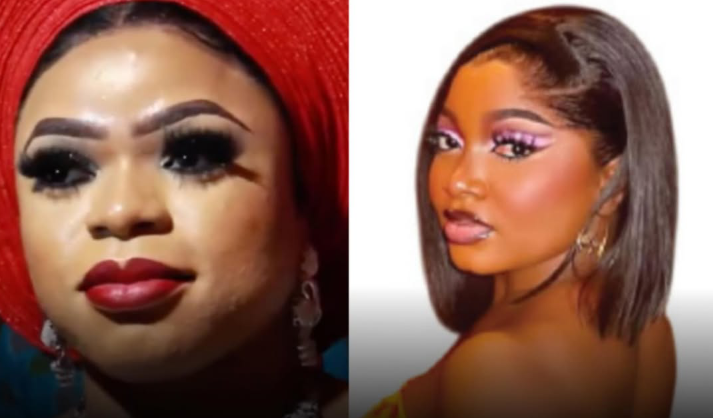
“‘Let Him Have Fun’: Papaya Ex Defends Bobrisky on Radio, Sparks Fresh National Debate”
Nigerian social media has once again been set ablaze following bold comments made by popular influencer Papaya Ex during a recent interview on Yanga 89.9 FM, where she openly defended controversial internet personality Bobrisky against persistent public criticism. The conversation, which aired earlier this week, has since spilled far beyond the radio studio, igniting intense reactions across digital platforms and reopening long-running debates about tolerance, identity, and personal freedom in Nigeria’s online space.
Speaking candidly on the programme, Papaya Ex dismissed the constant backlash Bobrisky receives, suggesting that many critics are overly invested in his personal choices. In her words, “If you’re mad at Bobrisky, you need to check yourself. I feel like he’s just having fun. Later in the future, Bobrisky will go back to being a father.” The statement, delivered in her usual unapologetic tone, immediately caught attention, particularly her suggestion that Bobrisky’s current lifestyle should not be viewed as permanent or definitive.
Papaya Ex went on to explain that people change over time and should be allowed the freedom to explore different phases of their lives without being harshly judged. According to her, Bobrisky’s social media persona represents a moment in time rather than a fixed identity, and society should learn to allow room for personal evolution. Her comments appeared to urge Nigerians to focus less on policing others’ lives and more on their own personal growth.
Papaya Ex, who has built a reputation as one of Nigeria’s most outspoken influencers, is no stranger to controversy herself. Known for her bold fashion choices, luxury lifestyle, and unfiltered opinions, she often sparks conversations that divide public opinion. Her defense of Bobrisky, however, touched a particularly sensitive nerve, given Bobrisky’s long-standing status as one of the most polarizing figures in the country’s entertainment and social media landscape.
Bobrisky, born Idris Okuneye, rose to fame through Snapchat before becoming a dominant presence on Instagram, where he cultivated a flamboyant and provocative online persona. Over the years, he has drawn both massive followership and intense criticism, frequently trending for his appearance, lifestyle, legal troubles, and outspoken defiance of societal norms. For supporters, Bobrisky represents unapologetic self-expression; for critics, he symbolizes what they see as a challenge to cultural and moral values.
Papaya Ex’s remarks on Yanga 89.9 FM quickly made their way to X, Instagram, and Facebook, where clips of the interview were widely shared. Reactions were swift and sharply divided. Some Nigerians applauded her stance, describing it as a rare call for tolerance in an environment often dominated by outrage and moral policing. Supporters argued that Bobrisky’s life choices do not directly harm others and that the constant attacks reveal deeper societal insecurities.
Others, however, strongly disagreed with Papaya Ex’s comments, insisting that Bobrisky deserves criticism for what they perceive as deliberate provocation and negative influence. Critics questioned her suggestion that Bobrisky would “go back to being a father,” with some describing the statement as dismissive of the broader concerns many Nigerians have expressed over the years. For this group, the issue goes beyond personal freedom and touches on values, accountability, and public influence.
The debate highlights a familiar pattern in Nigeria’s digital culture, where celebrity opinions often serve as catalysts for broader social conversations. Radio interviews that once might have passed quietly now routinely become viral moments, amplified by social media users eager to weigh in. In this case, Papaya Ex’s comments tapped into ongoing national conversations about identity, freedom of expression, and the limits of tolerance in a deeply conservative society.
Interestingly, some observers noted that Papaya Ex did not necessarily endorse Bobrisky’s lifestyle but rather defended his right to live without relentless hostility. By framing his actions as “just having fun” and potentially temporary, she appeared to humanize him in a way that many critics rarely do. To her supporters, this perspective reflects empathy rather than agreement, a distinction they argue is often lost in online debates.
Media analysts say the reaction to Papaya Ex’s interview underscores how deeply Bobrisky has become embedded in Nigeria’s cultural discourse. More than a social media influencer, he has evolved into a symbol onto which many Nigerians project fears, frustrations, and questions about modernity and tradition. As a result, any public figure who speaks about him, positively or negatively, is almost guaranteed to provoke strong responses.
As of now, Bobrisky himself has not publicly responded to Papaya Ex’s comments, though his social media activity remains closely watched whenever discussions about him trend. Papaya Ex, on the other hand, has continued posting her regular content, seemingly unfazed by the backlash and support alike. This silence has done little to slow the conversation, as commentators continue to dissect her words and their implications.
The episode also raises questions about the role of influencers and celebrities in shaping public opinion. With large followings comes significant influence, and statements made in casual interviews can ripple outward, shaping narratives far beyond their original context. For some Nigerians, Papaya Ex’s comments represent a refreshing challenge to mob judgment; for others, they are a troubling normalization of behavior they oppose.
What remains clear is that the interview has once again demonstrated the power of media moments in Nigeria’s social ecosystem. A few sentences on a radio show have reignited debates that touch on identity, freedom, culture, and the boundaries of acceptance. Whether one agrees with Papaya Ex or not, her remarks have forced many to confront why Bobrisky continues to evoke such strong emotions and what that says about the society watching him.
As the online arguments continue, one thing is certain: conversations around Bobrisky are unlikely to fade anytime soon, and voices like Papaya Ex’s will continue to shape, challenge, and complicate the national dialogue. In a country where social media often acts as both courtroom and town square, the clash of opinions sparked by this interview is yet another reminder that celebrity commentary can quickly become a mirror reflecting deeper societal tensions.
Popular Posts
A Shocking Breach of Trust: Ekiti Teaching Hospital Fires Surgeon Over Alleged Secret Kidney Removal
20 Dec, 2025
“‘Let Him Have Fun’: Papaya Ex Defends Bobrisky on Radio, Sparks Fresh National Debate”
20 Dec, 2025
A Fearless Voice Falls Silent: Nigeria Mourns Senator Peter Nwaoboshi at 68
20 Dec, 2025Scroll to Top