news
Akpabio Slams Natasha Akpoti with N200bn Defamation Suit as Sexual Harassment Allegations Trigger Political Firestorm
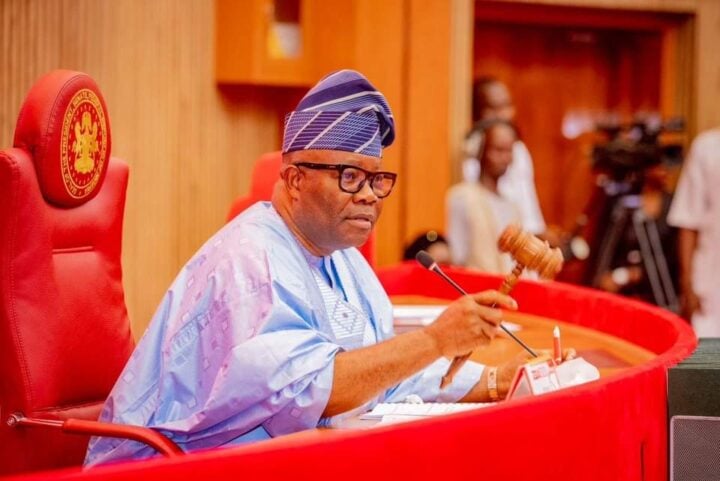
Nigeria’s political landscape was jolted on Friday after Senate President Godswill Akpabio filed a staggering N200 billion defamation lawsuit against Senator Natasha Akpoti-Uduaghan, following her explosive allegations that he sexually harassed her. The legal action, instituted at the Federal Capital Territory (FCT) High Court in Abuja, marks one of the most dramatic faceoffs between two sitting lawmakers in recent Nigerian political history, instantly sparking public debate and heightening tensions in the National Assembly. What began as an allegation has now escalated into a full-blown confrontation with enormous implications for reputation, credibility, and the growing conversation about power dynamics within Nigeria’s political circles.
The dispute reached public attention after Akpoti-Uduaghan, senator representing Kogi Central, made claims that Akpabio had sexually harassed her, comments that rapidly spread across social media and were amplified by public commentary. The Senate President has denied the allegations outright, describing them as false, malicious, and deliberately fabricated to damage his reputation and public image. With his lawsuit demanding damages of N200 billion, Akpabio has signaled his determination to confront what he calls an unfounded accusation and to seek judicial redress for what his legal team describes as a coordinated attempt to smear his name.
In reaction to news of the lawsuit, Natasha Akpoti-Uduaghan confirmed the development via a Facebook post, stating openly that the case presents her with an opportunity to prove her claims regarding the alleged harassment. Her statement quickly reignited intense discussions online, with supporters praising her courage and critics questioning the timing and credibility of the allegations. In a political climate already rife with tension, her response poured fuel on a fire that had barely begun to simmer.
For many observers, this legal battle is more than a personal confrontation—it is an unfolding test of Nigeria’s democratic institutions and their capacity to handle sensitive allegations involving powerful individuals. Akpabio, one of the country's highest-ranking political figures and the presiding officer of the Senate, has faced public scrutiny before, but the stakes in this particular case appear exceptionally high. The whopping N200 billion claim, one of the largest defamation compensations sought in Nigerian history, underscores the seriousness with which he perceives the allegation.
Within Abuja's political corridors, reactions have been mixed. Some lawmakers have refrained from commenting publicly, wary of taking sides in a matter already exploding across media platforms. Others privately express concern about the potential fallout and how the case could further polarize the Senate, particularly at a time when unity is needed to drive legislative business forward. Questions are also emerging about whether the case could influence committee alignments, political alliances, or deepen existing rifts among competing blocs in the Senate.
As the story continues to spread, the Nigerian public remains sharply divided. Supporters of Akpabio argue that the Senate President is right to defend himself vigorously against what they describe as a politically motivated accusation designed to embarrass him and destabilize his leadership. They point to what they believe is a trend of high-profile figures becoming targets of smear campaigns online, insisting that legal action is necessary to restore accountability and deter what they see as reckless reporting or unverified claims.
Meanwhile, supporters of Natasha Akpoti-Uduaghan frame the lawsuit as an attempt to silence a woman who chose to speak up about harassment in a system that has long been criticized for lacking safe spaces for such disclosures. On social media, hashtags backing Akpoti-Uduaghan have gained traction, with many echoing her sentiment that the court case offers a platform to present her side of the story and confront what she alleges happened. In their view, the lawsuit is not just about defamation—it is about power, gender, and the courage to challenge entrenched hierarchies in Nigerian politics.
Legal experts observing the case have begun offering varied analyses. Some argue that the matter will hinge on whether Akpoti-Uduaghan can provide substantial evidence to validate the allegations, a challenge that has characterized many similar cases globally. Others note that Akpabio, by opting for such a massive financial claim, is strategically signaling strength and confidence, potentially attempting to shift public perception in his favor even before the court proceedings gain momentum. The legal process, they say, could take months or even years, depending on motions, counterclaims, and the availability of witnesses.
The political implications, however, are immediate. The Senate President is a central figure in national governance, and any controversy involving him inevitably attracts widespread attention. Observers say this lawsuit could influence how the public perceives his leadership, either reinforcing his image as a man unwilling to tolerate defamatory attacks or casting lingering doubts about the allegations. For Natasha Akpoti-Uduaghan, this case adds another chapter to her career as a vocal and sometimes controversial political figure who has frequently confronted influential forces in Nigeria’s power structure.
Civil society groups and gender advocacy organizations are watching the developments closely. Some are calling for a transparent and fair judicial process free of political interference, stressing that cases involving sexual harassment allegations require sensitivity, thoroughness, and impartiality. Others caution against rushing to judgment in either direction, warning that public discourse must avoid fueling unnecessary division or undermining the integrity of individuals before evidence is fully examined.
The tension surrounding the case also reflects a broader societal debate about how allegations against powerful individuals are handled in Nigeria. Critics argue that women who come forward with harassment claims often face backlash, disbelief, or intimidation, creating an environment where many choose silence over controversy. Conversely, defenders of public figures argue that false allegations can destroy careers and reputations overnight, emphasizing the need for laws that protect against malicious defamation.
With both figures standing firm in their positions, the legal confrontation between Godswill Akpabio and Natasha Akpoti-Uduaghan is set to become one of the most closely watched cases of the year. As Nigerians brace for what could be a dramatic courtroom battle, the outcome may redefine not just personal reputations but also how allegations of this nature are viewed and litigated at the highest levels of political leadership. What began as a claim shared online has now evolved into a legal and political storm—one that the entire nation will be watching closely as it unfolds in the months to come
Popular Posts

“‘Let Those Who Want to Die, Die in Peace’ — Tacha Sparks Outrage as She Slams Aunty Esther for Rejecting Blood Transfusion After ₦30m Donation”
05 Dec, 2025
“DEY PLAY”: MERCY AIGBE TEASES DAUGHTER MICHELLE AFTER SHE SAYS SHE DOESN’T WANT A BIG WEDDING
05 Dec, 2025
Silent Hands Behind the Chaos: Retired Major General Ali-Keffi Alleges High-Level Links to Terror Suspects in Explosive Revelation
05 Dec, 2025Scroll to Top