news
Dangote, ICPC, and a High-Stakes Summons That Could Redraw Nigeria’s Oil and Gas Accountability Map
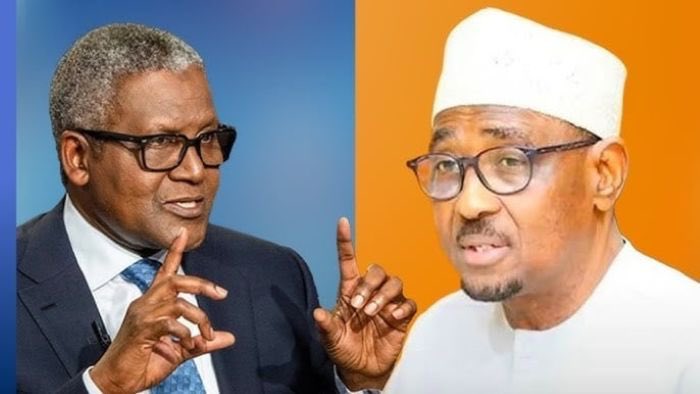
Nigeria’s anti-corruption landscape was jolted this week after reports emerged that Africa’s richest man and industrial titan, Aliko Dangote, has been invited by the Independent Corrupt Practices and Other Related Offences Commission to provide evidence in an ongoing probe involving the former chief executive of the Nigerian Midstream and Downstream Petroleum Regulatory Authority, Farouk Ahmed. The development has triggered intense public debate, not only because of the stature of the personalities involved but also because of what it could mean for transparency and accountability in the country’s critical oil and gas sector.
According to sources familiar with the matter, the ICPC’s invitation to Dangote is part of a broader investigation into allegations of regulatory misconduct, abuse of office, and possible conflicts of interest during Farouk Ahmed’s tenure at the NMDPRA. While the commission has not publicly disclosed the full details of the allegations, the move to seek testimony from Dangote has been interpreted as a signal that the investigation has reached a decisive phase, potentially involving high-level regulatory decisions that affected major industry players.
Dangote, whose business empire spans cement, sugar, salt, fertilizer, and petroleum refining, is a central figure in Nigeria’s economic story. His $20 billion Dangote Refinery, located in the Lekki Free Trade Zone, has been widely hailed as a game changer capable of ending Nigeria’s dependence on imported refined petroleum products. However, the project has also been entangled in regulatory disputes, public disagreements with sector regulators, and accusations of bureaucratic bottlenecks that Dangote himself has, at various times, openly criticized.
It is within this context that the ICPC’s invitation has taken on added significance. Observers believe Dangote’s testimony could shed light on regulatory actions taken by the NMDPRA that allegedly hindered or complicated the operations of the refinery and other downstream activities. In past public statements, Dangote accused certain officials of frustrating local refining efforts through questionable licensing decisions and preferential treatment for fuel importers, comments that sparked national conversations about vested interests within the petroleum value chain.
Farouk Ahmed, who previously headed the NMDPRA, has consistently denied any wrongdoing during his time in office. He has maintained that regulatory decisions under his leadership were guided strictly by law, safety standards, and the national interest. Supporters of the former regulator argue that enforcing compliance, even against powerful corporations, is part of the regulator’s mandate and should not automatically be framed as corruption or sabotage.
The ICPC, for its part, has emphasized that an invitation to provide evidence does not imply guilt on the part of any individual. Anti-corruption officials stress that investigations often require testimony from industry stakeholders who may have interacted directly with the subject of the probe or possess documents relevant to decision-making processes under scrutiny. Nonetheless, the optics of calling in Dangote have amplified public interest and speculation, given his rare position as both a private sector powerhouse and a vocal critic of regulatory inefficiencies.
Legal analysts note that if Dangote provides documentary or testimonial evidence suggesting that regulatory powers were abused for personal gain or to favor certain interests, it could significantly strengthen the ICPC’s case. Such evidence might include correspondence, licensing records, meeting minutes, or timelines that illustrate patterns of decision-making inconsistent with established regulations. Conversely, if Dangote’s testimony merely highlights policy disagreements or procedural delays without evidence of corrupt intent, the case could become more complex and politically sensitive.
The unfolding situation has reignited broader debates about Nigeria’s fight against corruption, especially in sectors long perceived as opaque. For decades, the oil and gas industry has been at the center of allegations involving rent-seeking, regulatory capture, and massive revenue leakages. Successive governments have promised reforms, and the passage of the Petroleum Industry Act was widely seen as a milestone aimed at restructuring governance and improving accountability. The current investigation is being watched as a test of whether these reforms can translate into concrete action against alleged misconduct at the highest levels.
Public reaction has been sharply divided. On social media and opinion platforms, some Nigerians have applauded the ICPC for demonstrating the courage to investigate powerful figures and institutions without fear or favor. Others have expressed skepticism, warning that high-profile probes often fade without convictions, reinforcing cynicism about the anti-corruption drive. There are also concerns about politicization, with critics cautioning that regulatory disputes should not be weaponized in broader power struggles between government agencies and influential business interests.
For the business community, the case underscores the delicate balance between regulation and investment. Investors have long argued that inconsistent policies and regulatory uncertainty discourage local and foreign capital. At the same time, civil society groups insist that strong, independent regulators are essential to prevent monopolistic practices and protect consumers. How the ICPC handles Dangote’s testimony and the overall investigation could influence perceptions of Nigeria’s investment climate and the credibility of its regulatory institutions.
As of now, neither Dangote nor the ICPC has released a detailed public statement outlining the scope of the expected testimony or the specific allegations against Farouk Ahmed. The former regulator is yet to formally respond to reports of Dangote’s invitation, although associates describe him as confident that due process will clear his name. The ICPC has reiterated its commitment to a thorough, impartial investigation, urging the public to avoid speculation while the process is ongoing.
What is clear is that the invitation has elevated the case beyond a routine investigation into a potential watershed moment for Nigeria’s oil and gas governance. If handled transparently and concluded decisively, it could reinforce the message that no individual or institution is beyond scrutiny. If mishandled, it risks deepening distrust in regulatory and anti-corruption frameworks.
As Nigerians await further developments, the spotlight remains firmly fixed on the ICPC, Aliko Dangote, and Farouk Ahmed. The outcome of this probe may not only determine individual reputations but also shape the future narrative of accountability, reform, and fairness in one of Africa’s most important energy markets.
Popular Posts
Dangote, ICPC, and a High-Stakes Summons That Could Redraw Nigeria’s Oil and Gas Accountability Map
21 Dec, 2025
“My Hands Are Clean” — Chris Ngige Breaks Silence as EFCC Files N2.2bn Fraud Case
21 Dec, 2025
“When Women Are Silenced, Nations Stand Still”: Dr. Folashade Olukoya Calls for Inclusion, Partnership, and Purpose
21 Dec, 2025Scroll to Top