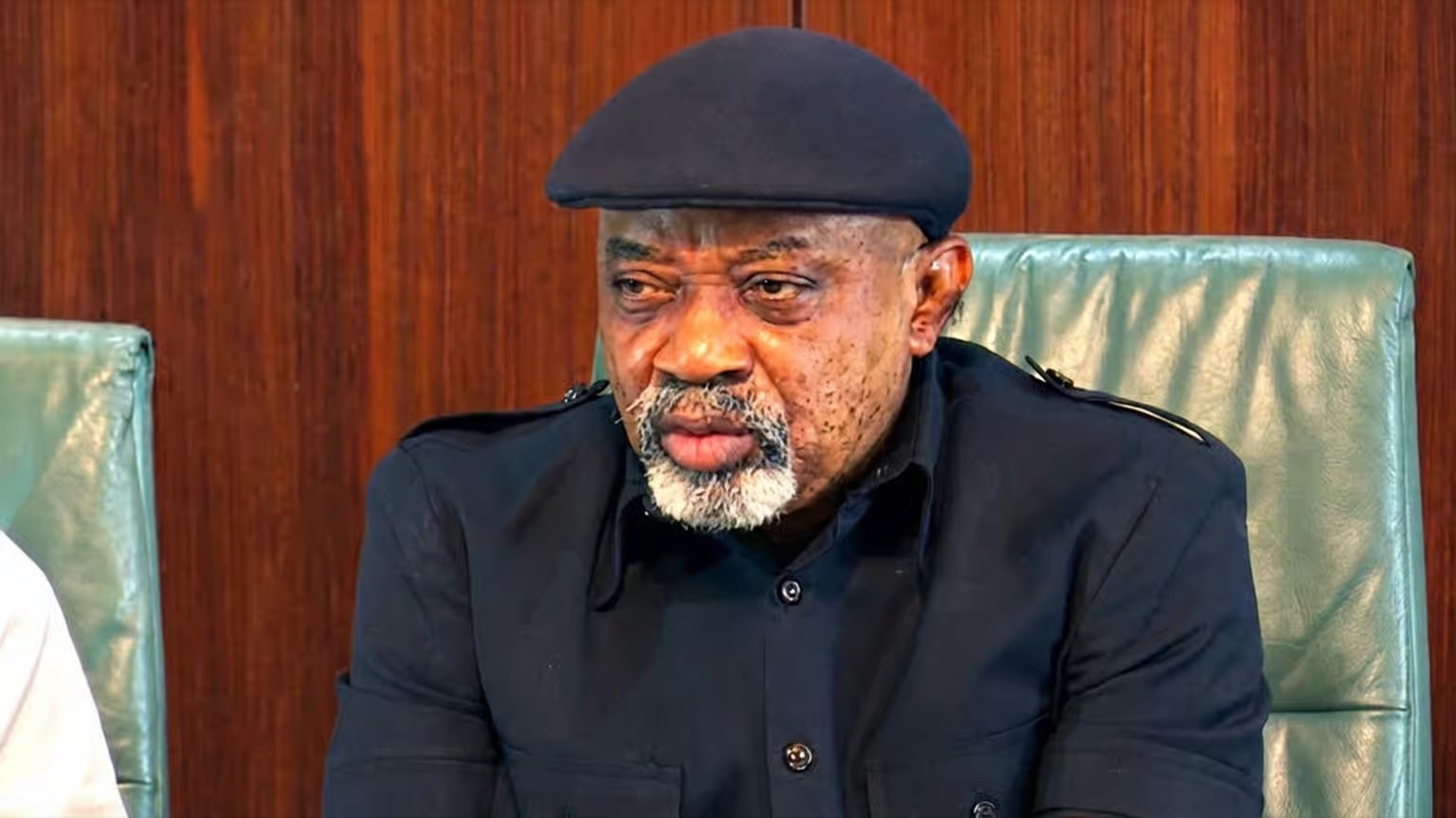
Former Minister of Labour and Employment, Senator Chris Ngige, has publicly denied any wrongdoing following the filing of a N2.2 billion fraud allegation against him by the Economic and Financial Crimes Commission (EFCC) in Abuja, insisting that his record in public service remains untainted and that the accusations will ultimately collapse under scrutiny.
The development, which has sparked widespread reactions across Nigeria’s political and civil spaces, marks a significant moment in the ongoing anti-corruption drive, as one of the country’s most recognizable political figures now finds himself facing serious allegations from the nation’s foremost anti-graft agency. Ngige, however, wasted no time in responding, declaring unequivocally that his “hands are clean” and that he has nothing to hide.
According to information surrounding the case, the EFCC alleges that the former minister was involved in financial infractions amounting to N2.2 billion, though the specific details of the transactions are expected to be laid out fully in court proceedings. The matter, now before a Federal High Court in Abuja, has drawn national attention not only because of the scale of the alleged sum, but also because of Ngige’s long-standing reputation as a public official who often portrayed himself as principled and uncompromising.
In his response, Ngige maintained that the allegations are baseless and politically motivated, stressing that throughout his years in office—both as a senator and as a minister—he adhered strictly to due process and financial regulations. He expressed confidence that the judicial process would vindicate him, stating that the truth would come to light once all facts are examined objectively.
Ngige, a former governor of Anambra State and a key figure in the Labour Ministry during the administration of former President Muhammadu Buhari, served as Minister of Labour and Employment from 2015 to 2023. During his tenure, he was a central figure in several high-profile negotiations, particularly those involving labour unions, minimum wage debates, and prolonged strikes by university lecturers under the Academic Staff Union of Universities (ASUU). His role often placed him at the centre of public controversy, earning him both supporters and critics.
The EFCC’s move has reignited debates about accountability among former public office holders and the timing of corruption cases involving politically exposed persons. While anti-corruption advocates argue that no one should be above the law regardless of status or past reputation, others have raised concerns about selective prosecution and the need for transparency in how such cases are pursued.
Reacting to the allegations, some of Ngige’s allies described the charges as an attempt to smear his name, pointing to what they see as his consistent stance against corruption and his refusal, during his time in office, to bow to political pressure. They argue that Ngige’s political history, particularly his well-known fallout with powerful interests in Anambra politics in the early 2000s, shows a pattern of resistance that has often attracted backlash.
On the other hand, critics insist that personal reputation should not shield anyone from investigation, emphasizing that allegations of such magnitude must be thoroughly examined in court. They note that Nigeria’s anti-graft war can only be credible if high-profile cases are pursued diligently and concluded transparently, without undue influence or media trial.
Legal analysts observing the case say it could become a major test of the EFCC’s prosecutorial strength, especially given the public profile of the defendant. They stress that for the commission, successfully proving its case would reinforce public confidence, while any procedural lapses or failure to substantiate the claims could further fuel skepticism about the effectiveness of corruption prosecutions in the country.
Ngige himself has urged Nigerians to remain calm and allow the courts to do their job, warning against rushing to judgment based on allegations alone. He reiterated that he would cooperate fully with the legal process and provide all necessary documentation to clear his name.
The case also comes at a time when the Nigerian public is increasingly vocal about governance, accountability, and the use of public funds, amid ongoing economic challenges and calls for reforms. For many citizens, allegations involving billions of naira resonate deeply, given the daily struggles faced by ordinary Nigerians and the persistent demand for responsible leadership.
As proceedings begin, attention will be focused on how the EFCC presents its evidence and how Ngige’s legal team counters the claims. The courtroom battle is expected to be closely followed, not just for its legal implications, but for what it represents in Nigeria’s broader fight against corruption.
For now, Senator Chris Ngige remains defiant, standing firmly by his assertion of innocence and projecting confidence that the allegations against him will not stand the test of law. Whether the case will affirm his claims or validate the EFCC’s accusations is a question that only the courts can answer, but one thing is clear: the unfolding drama has once again placed issues of integrity, justice, and accountability at the centre of national discourse.
Popular Posts
Dangote, ICPC, and a High-Stakes Summons That Could Redraw Nigeria’s Oil and Gas Accountability Map
21 Dec, 2025
“My Hands Are Clean” — Chris Ngige Breaks Silence as EFCC Files N2.2bn Fraud Case
21 Dec, 2025
“When Women Are Silenced, Nations Stand Still”: Dr. Folashade Olukoya Calls for Inclusion, Partnership, and Purpose
21 Dec, 2025Scroll to Top