news
Fayose Drops Bombshell: N50bn Federal Intervention Fund for Ibadan Explosion Victims, Says Makinde Diverted Money
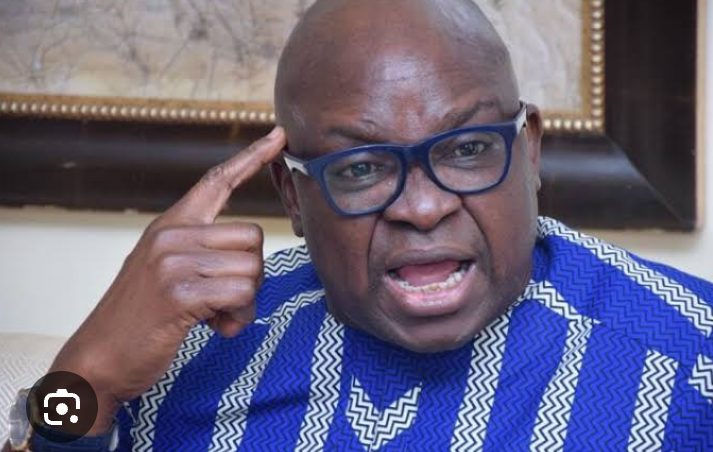
In a dramatic revelation that has set Nigerian political circles abuzz, former Ekiti State Governor Ayodele Fayose has released what he claims is concrete evidence showing that Oyo State, under Governor Seyi Makinde, received a staggering N50 billion from the Federal Government as intervention funds for victims of the January 2024 Ibadan explosion. Fayose, a longtime critic of Makinde and prominent figure in the People’s Democratic Party (PDP), disclosed the documents following the governor’s recent public challenge for proof.
The controversy traces back to two days ago, when Fayose appeared on national television asserting that Makinde’s administration had been allocated N50 billion from the Federal Government specifically to aid the thousands of Ibadan residents affected by the tragic explosion. The governor, reacting swiftly, reportedly demanded that Fayose present tangible proof to substantiate his claim. Yesterday, Fayose responded, unveiling what he described as “official evidence” confirming the transfer of the funds.
According to Fayose, despite the Federal Government releasing N50 billion to Oyo State, only a fraction—N4.5 billion—was actually distributed to the victims of the Ibadan explosion. He alleged that the remaining funds were allegedly diverted by Governor Makinde and his administration for purposes entirely unrelated to disaster relief, particularly his purported presidential ambitions. Fayose claims this alleged mismanagement explains the recent political tensions within the PDP and Makinde’s public attacks on President Bola Ahmed Tinubu and his administration.
“This is not my usual practice, as I rarely release official government documents into the public domain,” Fayose stated. “However, the people of Oyo State deserve the truth. When a sitting governor chooses to publicly reveal details of private meetings with the President, it becomes the duty of responsible Nigerians to ensure full transparency.”
Fayose’s statement was pointed, asserting that he had held back proof of other federal interventions and the actual Internally Generated Revenue (IGR) of Oyo State, suggesting that Makinde’s publicly claimed figures were inaccurate. “We have documentary evidence of other intervention funds provided to Oyo State by the Tinubu administration, which Governor Makinde refused to disclose,” Fayose added. “Similarly, the state’s IGR figures, as presented by Makinde, are disputed by verifiable records. But for now, we will keep that information in reserve.”
The political undertones of Fayose’s revelations are clear. Fayose, known for his fiery rhetoric and confrontational style, did not hesitate to call out Makinde directly, even challenging the governor to take legal action. “I challenge Governor Seyi Makinde to sue me on this matter,” Fayose said. “Let it be known that I do not make statements I cannot prove. Nigerians deserve clarity on the actual flow of government funds, especially those meant to provide relief in times of tragedy.”
The alleged misappropriation of funds, if true, would represent one of the most significant scandals involving state intervention funds in recent Nigerian history. The Ibadan explosion of January 2024 devastated large parts of the city, leaving countless residents homeless, businesses destroyed, and families grappling with enormous loss. In such circumstances, the efficient distribution of federal relief funds is not just a matter of policy but of urgent humanitarian necessity.
The N50 billion in question, released by the Federal Government, was intended to cover emergency relief, housing, medical treatment, and compensation for those directly affected by the tragedy. However, Fayose insists that the bulk of the funds never reached the victims. He suggests that the diversions were politically motivated, aimed at bolstering Makinde’s ambitions beyond Oyo State. The accusations, if substantiated, could not only impact Makinde’s political credibility but also intensify scrutiny of the PDP’s internal cohesion, particularly with respect to the party’s ongoing leadership disputes and presidential calculations.
Fayose’s move to release official documentation is unusual in Nigerian politics, where allegations often circulate in public without tangible evidence. By providing proof, Fayose seeks to shift the debate from rhetoric to verifiable facts, effectively raising the stakes for Makinde. “This is about transparency, accountability, and public trust,” Fayose insisted. “We are speaking to the conscience of Nigerians, who deserve to know exactly where intervention funds go and how state leaders manage the resources entrusted to them.”
The former governor’s disclosure comes at a time of heightened political tension in Nigeria, with the PDP facing internal conflicts and the ruling All Progressives Congress (APC) navigating its own controversies. The timing of the revelation has sparked speculation that it could influence public perception ahead of upcoming elections, particularly given the high profile of both Fayose and Makinde within their respective spheres of influence.
Makinde, who has cultivated an image as a progressive and reform-minded leader, now faces mounting pressure to respond with clear explanations and detailed accounting of the federal funds received. Political analysts suggest that this development could further polarize opinions in Oyo State, where residents are still grappling with the aftereffects of the Ibadan explosion and are eager for tangible relief and accountability.
Observers also note the broader implications for governance in Nigeria. The case highlights persistent concerns over the management of intervention funds, transparency in state financial reporting, and the challenges of balancing political ambition with public service. Fayose’s insistence on evidence-based claims contrasts sharply with the often unverifiable nature of political allegations in the country, potentially setting a precedent for more rigorous scrutiny of how states handle federal resources.
While Fayose has signaled that additional evidence regarding Oyo State’s IGR and other federal interventions exists, he has deliberately held back these details for now. Political watchers speculate that these reserves of information could be strategically released to maintain pressure on Makinde or to influence the broader political narrative.
In conclusion, the fallout from Fayose’s revelations is likely to reverberate for weeks, if not months. With official documents now in the public domain, Governor Makinde is under unprecedented scrutiny. The allegations of fund diversion strike at the heart of governance ethics and political accountability in Nigeria, raising urgent questions about the distribution of public resources and the integrity of elected officials.
As Nigerians await Makinde’s official response, the situation underscores the delicate balance between political rivalry and public interest. The Ibadan explosion was a tragedy that demanded swift, transparent, and compassionate intervention, and the public has every right to demand clarity on whether those in power fulfilled that responsibility. Fayose’s bold move to release proof, challenge the governor directly, and call for transparency may well redefine expectations for accountability in Nigerian state governance.
For now, the nation watches closely, as the unfolding dispute between Fayose and Makinde shines a spotlight on the critical intersection of politics, public funds, and moral responsibility. Whether this revelation leads to formal investigations, legal battles, or further political fallout remains to be seen, but one thing is clear: Nigerians are paying attention, and they demand answers.
Ayodele Fayose, the former Ekiti State Governor who served from 2003 to 2006 and 2014 to 2018, has once again positioned himself at the center of national debate, asserting that truth, transparency, and accountability must prevail—even against powerful sitting governors and entrenched political interests.
Popular Posts
Islamist Militants in Northern Nigeria Relocate After US Air Campaign
28 Dec, 2025
“I’m Sorry, Please Forgive Me” — Pastor Chris Okafor begs Before Church and Pleads With Members After Controversy Shocks Nation
28 Dec, 2025
Tiwa Savage Breaks Down in Tears on Stage: A Night of Emotion That Rocked the Crowd
28 Dec, 2025Scroll to Top