Entertainment
From Palace Whispers to Power Corridors: Social Media Erupts as Media Personality EVMMA Lists High-Profile Men Linked to SGF Akume’s Wife
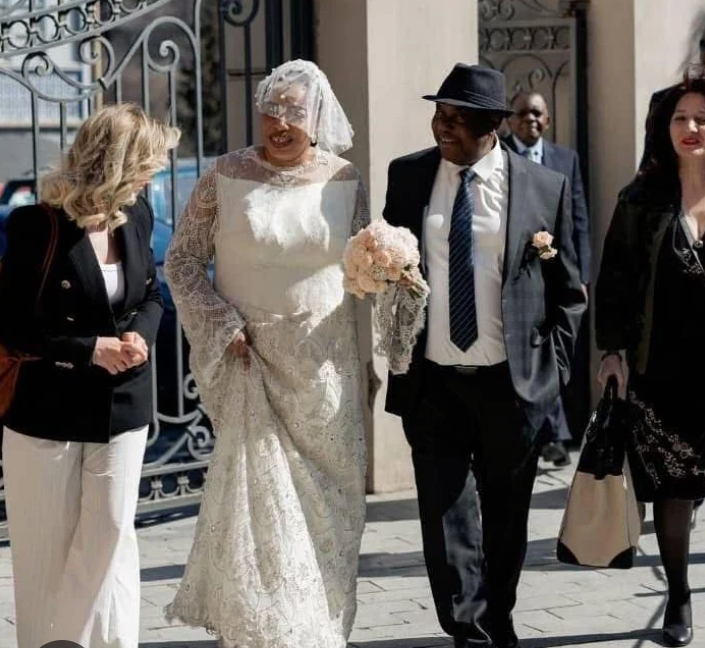
Social media was thrown into a frenzy after popular media personality Emma IK Umeh, widely known online as EVMMA, ignited a stormy conversation with a provocative post that quickly went viral across platforms, especially Instagram and X. The post, which was amplified by Instablog9ja, claimed to outline a roll call of powerful men allegedly previously married to or romantically linked with Zaynab, the wife of Nigeria’s Secretary to the Government of the Federation, Senator George Akume. As expected in Nigeria’s fast-moving digital gossip ecosystem, the claims sparked intense reactions ranging from shock and disbelief to outrage, satire, and calls for restraint.
In the now-viral post, EVMMA wrote in a tone that many described as sarcastic and loaded with innuendo, suggesting that Zaynab had once been married to or involved with a succession of influential men across politics, royalty, and international business. The list included a former governor of Jigawa State, a Dubai-based businessman, the Ooni of Ife, a purported Qatari prince, and finally, her current marriage to Senator George Akume, one of the most powerful figures in President Bola Tinubu’s administration. The post concluded with a drawn-out “Hmmm,” a subtle but unmistakable nudge meant to provoke speculation rather than provide clarity.
Within minutes of being shared by Instablog9ja, the post exploded into public consciousness, racking up thousands of comments and reposts. Screenshots circulated rapidly, drawing reactions from entertainment blogs, political commentators, and everyday users who dissected every line of the claim. For many, the controversy was less about the specifics of the alleged relationships and more about what they saw as a deliberate attempt to drag a high-ranking public official’s family into online ridicule.
Supporters of Senator Akume were quick to condemn the post, describing it as defamatory, misogynistic, and irresponsible. They argued that dragging a woman’s alleged marital history into public debate, especially without verified evidence, reflected a broader societal tendency to police and shame women for their personal lives. Some commenters pointed out that even if Zaynab had previous marriages, such history should not be weaponized against her or her husband, particularly when no official record supports the sensational claims being circulated.
Others, however, took a different stance, arguing that public figures inevitably attract scrutiny and that social media merely amplifies conversations that would otherwise remain whispered in elite circles. This group framed the controversy as part of Nigeria’s long-standing fascination with power, influence, and proximity to authority. To them, the list symbolized the intersection of wealth, royalty, politics, and global connections, themes that have always captured public imagination.
As the debate raged, attention also turned to EVMMA herself. Known for her blunt commentary and unapologetic online persona, the media personality has built a reputation for stirring controversy and challenging powerful interests. Critics accused her of chasing clout and engagement by making unverified claims, while supporters praised her for “saying what others are afraid to say.” The polarized reactions only fueled the virality of the post, ensuring it remained a top trending topic for hours.
Notably, neither Senator George Akume nor his wife, Zaynab, issued an official statement in response to the allegations at the time the story gained traction. The silence was interpreted in different ways. Some saw it as a dignified refusal to dignify gossip with a response, while others viewed it as a strategic move to avoid further amplifying the claims. Political aides close to the SGF reportedly dismissed the story as baseless social media chatter unworthy of official attention.
The episode has also reignited broader conversations about ethics in digital media and the responsibility of influencers and blogs with massive followings. Instablog9ja, one of Nigeria’s most influential gossip platforms, faced criticism for reposting the claims without context or verification. Media analysts warned that such posts blur the line between news and rumor, especially when they involve individuals connected to the highest levels of government.
Beyond the immediate personalities involved, the controversy highlights how quickly narratives can be constructed and consumed in the age of social media. A single post, framed as a casual “roll call,” was enough to dominate conversations, shape perceptions, and provoke emotional responses nationwide. It underscored the power of suggestion and the role of influential accounts in directing public discourse, often without accountability.
Gender advocates also weighed in, emphasizing that women linked to powerful men often become collateral damage in political and social battles. They argued that Zaynab’s identity was being reduced to a list of alleged relationships, stripping her of agency and individuality. For them, the backlash against the post was a reminder of the need to challenge narratives that frame women’s worth through the men they are associated with.
As the buzz gradually began to fade, one thing remained clear: the incident had tapped into deep currents within Nigerian society, including fascination with elite circles, distrust of power, and the enduring appeal of scandal. Whether the claims hold any truth or not may ultimately be irrelevant to many online observers. What mattered was the spectacle, the conversation, and the fleeting sense of access to the private lives of those at the top.
In the end, the saga surrounding EVMMA’s viral post serves as yet another example of how Nigeria’s digital space has become a battleground where gossip, politics, and personal lives collide. It is a reminder that in today’s media landscape, perception often travels faster than facts, and once a story escapes into the wild of social media, controlling its narrative becomes nearly impossible.
Popular Posts

Tinubu Announces Arrival of Four US Attack Helicopters as Nigeria Intensifies Fight Against Insecurity
27 Dec, 2025
“No Terrorists Killed, No Camps Destroyed”: Asari Dokubo Slams Reported U.S. Airstrikes in Sokoto as Ineffective and Dangerous
27 Dec, 2025
Mohbad’s Widow Wunmi Aloba Trends Again as Unverified Rumors of Second Child Spark Fresh Online Debate
26 Dec, 2025Scroll to Top