Entertainment
“Giants Only on Paper”: Isaac Fayose’s Morocco Comparison Sparks Fresh Debate on Nigeria’s Reality Check
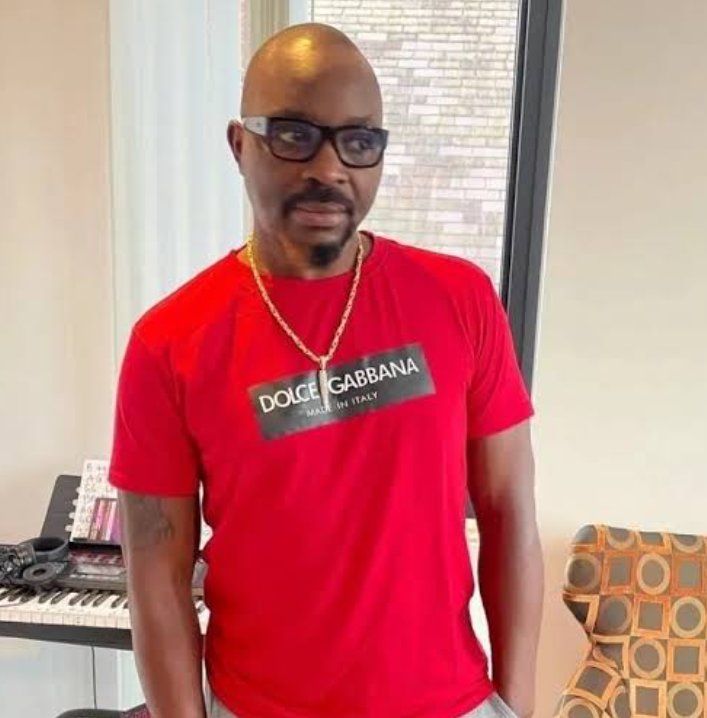
Media personality and social commentator Isaac Fayose has stirred widespread conversation after bluntly declaring that Nigeria is a “giant only on paper,” drawing a sharp comparison between Africa’s most populous nation and Morocco. The remark, which quickly gained traction across social media platforms, has reignited a familiar but uncomfortable national debate about Nigeria’s perceived greatness versus the lived realities of its citizens, and why smaller or less-populated African countries often appear to be making more visible progress.
Fayose’s statement came in the context of comparing Nigeria’s infrastructure, governance, economic planning, and global competitiveness with that of Morocco, a North African country with a significantly smaller population and landmass. According to him, while Nigeria loudly carries the title of “Giant of Africa” based on population size, natural resources, and market potential, countries like Morocco are quietly translating vision into results through long-term planning, discipline, and policy consistency. His words struck a nerve because they echoed frustrations many Nigerians have expressed for years, albeit in harsher, more unfiltered language.
Nigeria’s reputation as Africa’s giant has long rested on impressive statistics. With over 200 million people, abundant oil and gas reserves, fertile land, and a vibrant cultural influence, the country dominates African conversations in entertainment, sports, and demographics. Nollywood is globally recognized, Nigerian music tops international charts, and Nigerians excel across the diaspora. Yet Fayose’s critique suggests that these soft-power victories mask deeper structural weaknesses at home, weaknesses that become glaring when Nigeria is placed side by side with countries like Morocco.
Morocco, Fayose noted, has invested heavily in infrastructure that visibly impacts daily life. From efficient rail systems, including high-speed trains, to well-maintained roads, ports, and airports, Morocco presents a picture of a country determined to position itself as a gateway between Africa and Europe. Its tourism sector is aggressively marketed and carefully managed, its cities are cleaner and better planned, and its manufacturing and renewable energy sectors continue to attract foreign investment. For Fayose, the contrast raises a troubling question: why does Nigeria, with far more resources, struggle to deliver similar outcomes?
The comparison resonated particularly strongly online, where Nigerians shared personal experiences of traveling to Morocco and returning home disillusioned. Many pointed to stable electricity, functional public transport, and efficient public services as everyday realities in Morocco that remain elusive in Nigeria. Others highlighted how Morocco has strategically branded itself on the global stage, hosting international events, securing major sporting tournaments, and positioning its cities as investor-friendly hubs, while Nigeria continues to battle insecurity, policy reversals, and infrastructural decay.
Supporters of Fayose’s argument say his words reflect an urgent truth Nigeria must confront. They argue that the country’s size has often bred complacency, with leaders relying on population and oil revenues rather than innovation, productivity, and human capital development. According to this view, Nigeria’s “giant” status has become more of a slogan than a measurable standard, repeated so often that it discourages honest self-assessment. Comparing Nigeria to Morocco, they say, exposes how vision, leadership, and execution matter more than size or potential.
However, critics of Fayose’s remarks caution against oversimplification. They argue that Nigeria and Morocco operate under very different historical, political, and regional realities. Nigeria’s diversity, with hundreds of ethnic groups, languages, and religious identities, presents governance challenges that Morocco, a more culturally homogeneous country, does not face to the same degree. Others note that Nigeria’s federal system, history of military rule, and decades of corruption have created complex problems that cannot be undone overnight. To them, comparisons that ignore these nuances risk reducing serious national issues to viral soundbites.
Still, even some critics concede that Fayose’s comparison hits close to home because it forces Nigerians to look beyond excuses. Morocco, they point out, has had its own struggles with unemployment, inequality, and political dissent, yet has managed to pursue coherent national strategies in key sectors. The country’s long-term investments in renewable energy, particularly solar power, are often cited as examples of planning that transcends election cycles. Nigeria, by contrast, frequently announces ambitious projects that stall, are abandoned, or are restarted by successive administrations under new names.
The debate sparked by Fayose’s comment also extends to leadership culture. Many Nigerians argue that Morocco benefits from a clearer sense of national direction, while Nigeria’s leadership often appears reactive rather than proactive. Policies change abruptly, institutions remain weak, and accountability is inconsistent. In this environment, critics say, Nigeria’s immense potential becomes a burden rather than a blessing, because expectations are constantly raised but rarely met.
On social media, the phrase “giants only on paper” has quickly become shorthand for broader frustrations about unemployment, inflation, insecurity, and declining public trust. Young Nigerians, in particular, have latched onto the comment as a reflection of why many are eager to leave the country in search of better opportunities. To them, comparisons with Morocco are not about national pride but about quality of life, dignity of labor, and the hope of a functional system.
Yet amid the criticism, some voices urge Nigerians not to lose sight of the country’s strengths. They argue that Nigeria’s size and diversity, while challenging, also offer unmatched potential if properly harnessed. The country’s entrepreneurial energy, youthful population, and cultural influence remain powerful assets. The real issue, they say, is not whether Nigeria is a giant, but whether it is willing to do the hard work required to live up to that title.
Isaac Fayose’s remark may not introduce a new argument, but its bluntness has reignited an old conversation at a critical time. As Nigeria grapples with economic reforms, rising living costs, and questions about its future direction, comparisons with countries like Morocco serve as both a mirror and a warning. Being a giant on paper, Fayose suggests, is no longer enough in a world where progress is measured by systems that work, institutions that endure, and leadership that delivers.
Whether Nigerians agree or disagree with Fayose’s comparison, his statement has succeeded in one crucial way: it has forced a moment of reflection. The challenge now is whether that reflection will translate into meaningful action, or fade away like many debates before it, leaving Nigeria’s giant status intact in name, but still searching for substance in reality.
“We’re giants only on paper” — Media personality Isaac Fayose says as he compares Nigeria to Morocco
— Instablog9ja (@instablog9ja) December 29, 2025
pic.twitter.com/YALG5XwcwL
Twitter Post
Visit websitePopular Posts

Beyoncé Becomes a Billionaire, Joins Jay-Z as One of Music’s Richest Power Couples
29 Dec, 2025
Anthony Joshua Involved in Fatal Road Accident on Lagos–Ibadan Expressway, Two Dead
29 Dec, 2025
“Your Apology Is Damage Control” — Doris Ogala Rejects Pastor Chris Okafor’s Public Plea as Church Scandal Deepens
29 Dec, 2025Scroll to Top