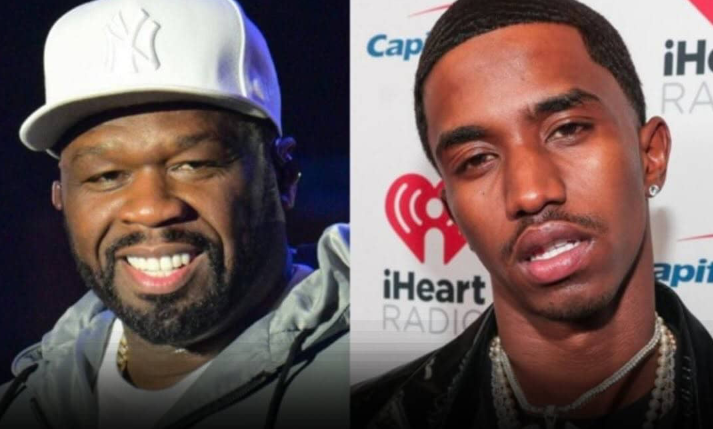
In a moment that’s sent shockwaves through the hip-hop community and reignited one of music’s longest-standing feuds, Diddy’s son King Combs ignited fresh fire online this week with a bold and controversial threat aimed at rap legend 50 Cent. The since-deleted post, which instantly went viral across social platforms, saw the younger Combs vow—in no uncertain terms—that if he ever saw 50 Cent in person, he would “slap the f*** outta him,” swearing on his father’s name to underline the seriousness of his words.
The brief outburst, shared on X (formerly Twitter) on Thursday, December 18, served as the latest salvo in a simmering tension that’s been brewing for years between the families and camps of Sean “Diddy” Combs and Curtis “50 Cent” Jackson. While the exact motivation behind King’s aggressive declaration hasn’t been publicly clarified, it is widely seen as an extension of the broader animosity that has periodically flared between the hip-hop icons and their entourages.
This isn’t the first time King Combs has publicly locked horns with 50 Cent. In May 2024, the 26-year-old rapper released a diss track titled “Pick A Side”, directly confronting the Queens native and defending his father amid a barrage of lawyer battles and legal controversies surrounding Diddy. In the track, King went after critics—including 50 Cent—who had seized on allegations against his father to criticize the Bad Boy Records founder publicly.
King’s rap wasn’t subtle. He challenged detractors with lines that questioned 50 Cent’s legacy in hip-hop while staunchly backing up his own family’s stance: “When all they had was 50 Cent who put this city on the map? Stop lyin’… Pops been hated on by many men,” he rapped on the track. That cutting lyric set the stage for the kind of public back-and-forth that would continue long after the track dropped.
50 Cent didn’t let King’s 2024 diss go unanswered. The rap icon responded with characteristic sarcasm on social media, mocking the threat posed by King’s lyrics and portraying himself as unfazed by the younger Combs’ bold words. “I feel so threatened by the things Christian is saying on his record,” 50 Cent joked in one Instagram post, before adding in another, “You still living off Wi-Fi and legacy. Relax.” His response blended humor with pointed dismissal, underscoring the generational divide and ongoing rivalry.
The feud between 50 Cent and the Combs family has deep roots, stretching back decades. Both artists rose to prominence around the turn of the millennium and have been intertwined through occasional clashes, critiques, and competitive moments in hip-hop culture. Most recently, their animosity has overlapped with Diddy’s highly publicized legal battles, including federal raids of his properties and multiple lawsuits. 50 Cent emerged as one of Diddy’s most vocal critics, using social media to critique the embattled music mogul even as the cases brought against him unfolded.
For King Combs, these battles have been intensely personal. He has positioned himself as a defender of his father’s legacy, a role that has thrust him into the spotlight and placed him at the center of high-profile exchanges with one of hip-hop’s most experienced provocateurs. Whether through diss tracks or direct social media challenges, King’s public persona has increasingly aligned with loyalty to family and readiness to stand up to critics—no matter how iconic.
Yet the incendiary line about slapping a legendary artist in person marks a significant escalation. In hip-hop culture, where bravado and rhetoric often carry symbolic weight, the decision to call out another star so directly is rarely taken lightly. Fans and industry observers have noted that this kind of confrontation can quickly shift from lyrical competition to real-world tension, blurring the lines between art and animosity.
50 Cent’s immediate response to King’s X post was to treat it with levity rather than alarm. Within hours, he had fired back with a series of posts that mixed mockery with self-assertion, framing King’s aggressive stance as overblown and rooted more in emotion than achievement. The exchange quickly filled timelines across the music world, drawing reactions from fellow artists, commentators, and fans alike.
Some voices in hip-hop weighed in on the conflict, with figures like Meek Mill previously entering the fray by defending King and criticizing 50 Cent’s online conduct during past exchanges. These external interventions reflect how deeply connected and invested the broader rap community has become in the narrative between the Combs and Jackson camps.
From social media outbursts to rap diss tracks, the feud encapsulates a multifaceted rivalry that blends personal loyalty, generational differences, artistic competition, and public scrutiny. For King Combs, now stepping into the spotlight as both an artist and a defender of his father’s name, the stakes feel especially high. And while many fans have called for cooler heads and more music and less conflict, the drama shows no sign of cooling down.
Whether the slapping threat was momentary heat of the moment or the start of a new chapter in this storied hip-hop feud remains to be seen. But one thing is clear: the battle lines between King Combs and 50 Cent are now as vivid online as they are in lyrics, and the world is watc
hing every exchange.
Popular Posts

Shock and Silence in Abakaliki as Senior Police Officer Slumps, Dies During Command Meeting
19 Dec, 2025
“It’s Time to Stop Deceiving Yourself”: Jada P’s Blunt Message to Side Chicks Sparks Heated Debate Online
19 Dec, 2025
King Combs Vows to “Slap 50 Cent” in Explosive Social Media Outburst
19 Dec, 2025Scroll to Top