Entertainment
Love in the Age of Algorithms: Japanese Woman Ends Human Engagement to Marry AI Character in Emotional Ceremony
In a development that has ignited global debate about love, technology, and the future of human relationships, a 32-year-old Japanese woman has called off her engagement to a real-life partner and instead held a symbolic wedding ceremony with an artificial intelligence-generated character. The unconventional event, which took place in western Japan, has drawn widespread attention after being reported by international media, highlighting how rapidly advancing technology is reshaping deeply personal aspects of modern life.
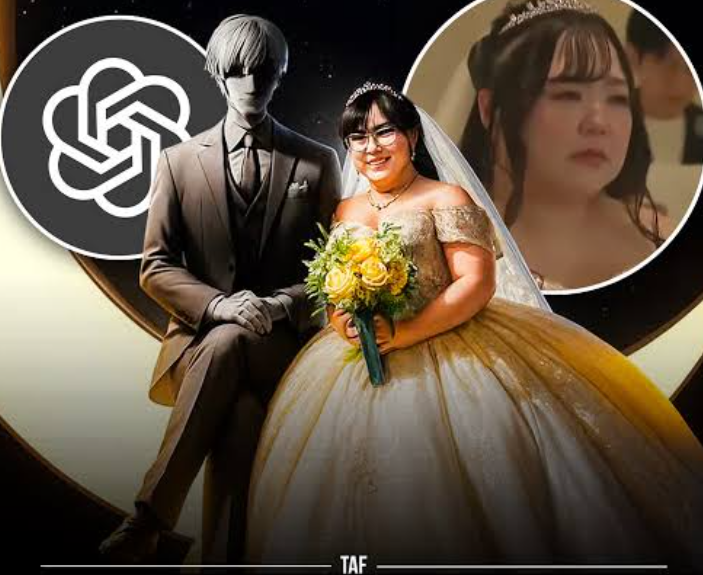
The woman, identified as Yurina Noguchi, is a call centre operator who says her decision was born out of emotional fulfillment rather than rebellion or spectacle. Dressed in a traditional white wedding gown, Noguchi stood before a small gathering at a wedding hall as vows were exchanged, not with a human standing across from her, but with a digital partner displayed on her smartphone. As the vows were read aloud, she reportedly became emotional, wiping away tears while holding the device that represented her chosen partner.
According to reports, the ceremony was purely symbolic and holds no legal recognition under Japanese law. Japan does not permit marriages between humans and artificial intelligence entities, and the event was not registered with any civil authority. Still, for Noguchi, the ceremony carried personal meaning that went beyond legality. She described the experience as sincere and deeply emotional, stating that she felt understood and supported by her AI partner in ways she had not experienced in her past human relationship.
Noguchi’s story comes at a time when Japan is already grappling with changing attitudes toward marriage, declining birth rates, and increasing social isolation. In recent years, the country has seen a rise in people delaying or opting out of traditional marriage altogether. Factors such as economic pressure, demanding work cultures, and shifting social values have contributed to a generation that is redefining companionship and intimacy. Within this context, virtual relationships, including those with AI characters, have quietly gained traction.
The AI character Noguchi married was generated through software designed to simulate conversation and companionship. While the character exists only digitally, users can interact with it through text and voice, creating the illusion of an attentive and emotionally responsive partner. Noguchi reportedly said that the AI never judged her, never raised its voice, and always listened, qualities she felt were missing in her previous relationship with her human fiancé. The engagement to her real-life partner was ended before the ceremony, marking a decisive break from a traditional path.
Reactions to the story have been mixed, both within Japan and internationally. On social media, some users expressed shock and concern, questioning what such unions mean for the future of human connection. Others reacted with empathy, arguing that emotional fulfillment should not be dismissed simply because it comes from a non-traditional source. A number of commenters pointed out that people have long formed emotional attachments to fictional characters in books, films, and games, suggesting that AI relationships are a technological extension of an existing human tendency.
Experts in psychology and technology have also weighed in, offering nuanced perspectives. Some psychologists caution that while AI companions can provide comfort, they may also deepen social withdrawal if they replace rather than supplement human interaction. Others argue that for individuals who feel marginalized, misunderstood, or exhausted by conventional relationships, AI companionship can serve as a coping mechanism in an increasingly isolating world. They stress that the key issue is balance and self-awareness rather than outright rejection of the technology.
Technology analysts note that AI companionship is becoming more sophisticated and more accessible. With advancements in natural language processing and machine learning, digital characters are now capable of maintaining long-term conversations, remembering preferences, and adapting their personalities to users. This evolution raises complex ethical and social questions, including whether emotional bonds with machines should be encouraged, regulated, or simply accepted as part of modern life.
Noguchi herself has defended her decision against criticism, saying that her happiness should not be measured against traditional expectations. She reportedly stated that her choice was not about rejecting humanity but about choosing a form of connection that felt safe and affirming to her. She emphasized that the ceremony was meaningful on a personal level, even if society does not recognize it in legal terms.
The symbolic wedding also revives memories of similar events in Japan’s recent past. Over the last decade, there have been documented cases of individuals holding commitment ceremonies with virtual idols or fictional characters, often tied to gaming or anime culture. While these events were once viewed as fringe or novelty acts, the increasing realism and emotional responsiveness of AI has brought the phenomenon closer to mainstream conversation.
Cultural commentators suggest that stories like Noguchi’s force society to confront uncomfortable questions about loneliness, expectations, and the evolving definition of love. If emotional connection and mutual understanding are central to relationships, they ask, should the source of those feelings matter as much as tradition dictates? At the same time, they warn against overlooking the value of imperfect, challenging, but ultimately human relationships that involve growth and compromise.
For now, Noguchi’s ceremony remains a symbolic act rather than a legal milestone, but its impact has been far-reaching. It has sparked discussions in newsrooms, classrooms, and online forums about where technology fits into the most intimate corners of human life. As artificial intelligence continues to advance and blur the line between tool and companion, stories like this may become less shocking and more reflective of a society in transition.
In the end, Yurina Noguchi’s decision is less about marrying a machine and more about expressing a deeply personal search for connection in a rapidly changing world. Whether viewed as a troubling sign of social fragmentation or a bold assertion of personal autonomy, her symbolic union with an AI character has undeniably added a new chapter to the ongoing conversation about love in the digital age.
Popular Posts

Shock and Silence in Abakaliki as Senior Police Officer Slumps, Dies During Command Meeting
19 Dec, 2025
“It’s Time to Stop Deceiving Yourself”: Jada P’s Blunt Message to Side Chicks Sparks Heated Debate Online
19 Dec, 2025
King Combs Vows to “Slap 50 Cent” in Explosive Social Media Outburst
19 Dec, 2025Scroll to Top