Entertainment
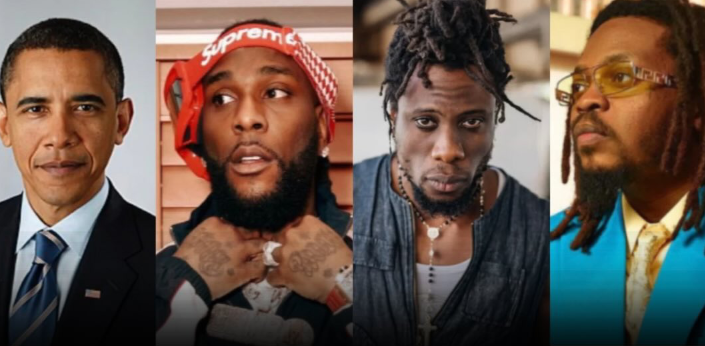
Obama’s Playlist Sparks Afrobeats Debate as Davido and Wizkid Miss Out While Burna Boy, Olamide and Obongjayar Make the Cut
Former United States President Barack Obama has once again proven his enduring influence on global pop culture, not through policy or speeches this time, but through music. His much-anticipated annual list of favorite songs for 2025 has landed, and as expected, it has ignited conversations across continents. For Nigerian music lovers and Afrobeats fans worldwide, the buzz is particularly intense, as the playlist features Burna Boy, Olamide, and Obongjayar, while conspicuously omitting two of Nigeria’s most internationally celebrated stars, Davido and Wizkid.
Obama’s year-end playlists have become a cultural moment of their own, eagerly awaited by fans, artists, and industry watchers. What began years ago as a casual glimpse into the former president’s personal listening habits has evolved into a tastemaking platform with real-world impact. Songs featured on the list often experience renewed streams, wider global exposure, and a symbolic stamp of approval that money cannot buy. As such, any inclusion or exclusion tends to be scrutinized closely, and the 2025 list is no exception.
This year’s selection underscores Obama’s continued appreciation for African and African-inspired sounds, particularly the evolving Afrobeats and alternative African music scenes. Burna Boy’s presence on the list feels almost expected at this point. The Grammy-winning artist has appeared on Obama’s playlists before, cementing his reputation as one of Africa’s most globally resonant voices. His music, often rooted in Afro-fusion, carries themes of identity, resistance, love, and celebration, elements that have long aligned with Obama’s publicly stated taste for soulful, meaningful storytelling.
Olamide’s inclusion, however, has generated a different kind of excitement. Known as one of Nigeria’s most influential indigenous rappers, Olamide’s career has largely been driven by his deep connection to local culture, language, and street narratives. While he commands massive respect and loyalty at home, his global visibility has traditionally been more understated compared to pop-heavy Afrobeats exports. Obama spotlighting an Olamide song is being read by many as a nod to the depth and authenticity of Nigerian music beyond its most commercial faces, signaling that cultural impact does not always need crossover gloss to be recognized.
Equally compelling is the appearance of Obongjayar, an artist often described as genre-defying. With his haunting vocals, experimental sound, and emotionally charged songwriting, Obongjayar represents a newer wave of African artists who blur the lines between soul, electronic, folk, and Afrobeats. His inclusion reinforces the idea that Obama’s playlists are not merely about chart performance but about artistry, mood, and message. For many fans, it also feels like a win for alternative African musicians who operate outside mainstream formulas yet continue to shape the future of the sound.
Still, the loudest reaction online has centered on who did not make the list. Davido and Wizkid, arguably Nigeria’s most recognizable musical exports and two artists whose global achievements have helped propel Afrobeats into stadiums and award shows worldwide, were absent. Almost immediately after the playlist was released, social media platforms, especially X and Instagram, were flooded with debates, jokes, memes, and passionate arguments from fans of both stars.
Some fans interpreted the omission as a deliberate “snub,” framing it within the long-running rivalry narratives that often surround Nigeria’s biggest music acts. Others were quick to point out that Obama’s playlist is a personal selection, not a ranking or a comprehensive overview of a genre. They argued that absence from the list does not diminish Davido’s or Wizkid’s influence, success, or global reach in any tangible way.
Industry observers have also weighed in, suggesting that Obama’s choices often reflect personal listening moods rather than popularity metrics. Over the years, his playlists have mixed chart-toppers with deep cuts, emerging acts, and artists from diverse regions. In that sense, the 2025 list appears consistent with his established pattern: eclectic, thoughtful, and sometimes surprising. Davido and Wizkid have both previously appeared on Obama-curated lists in past years, making their absence this time less of a statement and more of a snapshot of changing tastes.
Beyond fan debates, the playlist has reignited broader conversations about the diversity within Afrobeats and African music as a whole. For years, the global narrative around Afrobeats has often been dominated by a few superstar names, which, while deserved, can sometimes overshadow the genre’s richness and variety. Obama’s selection of Burna Boy, Olamide, and Obongjayar subtly pushes back against a monolithic view of African music, highlighting different textures, languages, and creative philosophies within the same ecosystem.
The reaction from Nigerian audiences has been a mix of pride and introspection. Many see the inclusions as validation of Nigeria’s musical depth, proof that its influence extends far beyond a handful of global hitmakers. At the same time, the intense focus on omissions reflects how deeply invested fans are in international recognition, often viewing moments like Obama’s playlist as symbolic victories on a global stage.
For the artists involved, the impact is likely to be tangible. Burna Boy’s inclusion further strengthens his image as a global cultural figure, while Olamide and Obongjayar may experience renewed international curiosity and streaming boosts. For Davido and Wizkid, the moment is unlikely to slow their momentum in any meaningful way. Both artists continue to sell out arenas, headline festivals, and rack up milestones that few African musicians before them could have imagined.
Ultimately, Obama’s 2025 playlist serves as a reminder of music’s subjectivity and its power to spark conversation across borders. A former world leader sharing his favorite songs may seem like a small gesture, but in today’s interconnected cultural landscape, it carries weight. It shapes discourse, amplifies voices, and occasionally unsettles expectations.

As the debates continue and fans dissect every choice, one thing remains clear: Nigerian music, in all its forms, is firmly planted on the global map. Whether through the familiar dominance of superstars or the quieter rise of alternative and indigenous voices, the sound continues to evolve and resonate. Obama’s latest playlist, controversial or not, has once again placed that evolution front and center, reminding the world that African music is not a single story, but a chorus of many compelling voices.
Popular Posts

Shock and Silence in Abakaliki as Senior Police Officer Slumps, Dies During Command Meeting
19 Dec, 2025
“It’s Time to Stop Deceiving Yourself”: Jada P’s Blunt Message to Side Chicks Sparks Heated Debate Online
19 Dec, 2025
King Combs Vows to “Slap 50 Cent” in Explosive Social Media Outburst
19 Dec, 2025Scroll to Top