news
“Subsidy Removal Has Only Brought Poverty, Inflation, and Insecurity” — Solomon Dalung Slams Tinubu’s Economic Decision
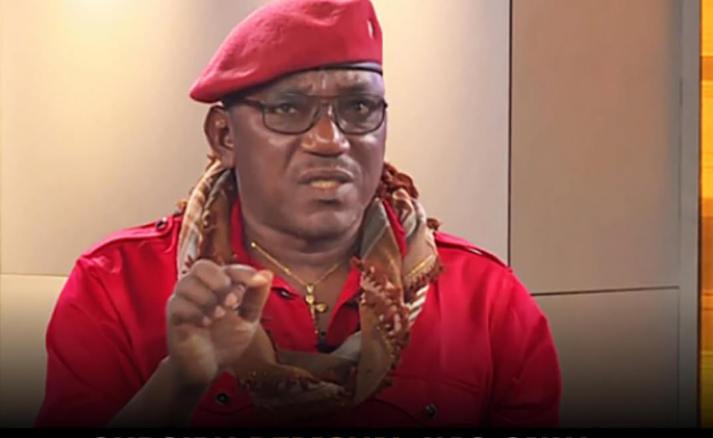
Former Minister of Sports and Youth Development, Solomon Dalung, has launched a scathing critique of the Federal Government’s removal of fuel subsidy, describing the policy as a monumental failure that has plunged millions of Nigerians deeper into poverty while fuelling inflation, hunger, and widespread insecurity across the country. Speaking during an appearance on Channels Television’s Sunrise Daily on Thursday, December 18, 2025, Dalung argued that the decision, announced by President Bola Ahmed Tinubu shortly after his inauguration in May 2023, was rushed, poorly thought out, and disconnected from the realities of governance and the lived experiences of ordinary Nigerians.
Dalung recalled that on the day President Tinubu was sworn in, he declared that the “subsidy is gone,” framing the move as a bold economic reform necessary to rescue Nigeria from fiscal collapse. According to the president, the funds previously spent on subsidising fuel consumption would be redirected to critical sectors and shared among states to stimulate development and improve the welfare of citizens. Nearly two years later, Dalung said, the promised benefits remain largely invisible, while the negative consequences of the policy are painfully evident in every corner of the country.
The former minister argued that the manner in which the subsidy removal was announced exposed a fundamental misunderstanding of how government policy should be formulated and implemented. He stressed that such a far-reaching economic decision ought to have followed extensive consultations with stakeholders, economic experts, labour unions, state governments, and the general public. Instead, he said, it was declared at a time when there was no fully constituted cabinet, no comprehensive advisory structure, and no clearly communicated mitigation framework to cushion the impact on vulnerable Nigerians.
According to Dalung, the immediate aftermath of the subsidy removal was a sharp and sustained increase in fuel prices, which triggered a chain reaction across the economy. Transportation costs surged overnight, pushing up the prices of food, basic goods, and essential services. For a country already grappling with high unemployment and stagnant wages, he said, the policy effectively transferred the burden of economic adjustment to the poorest citizens, who spend a disproportionate share of their income on energy and transportation.
Dalung noted that inflation, which had already been a concern before the policy change, spiralled to alarming levels in the months that followed. He argued that the government underestimated how deeply fuel prices are embedded in Nigeria’s economic structure, affecting everything from agriculture and manufacturing to healthcare and education. As fuel became more expensive, farmers struggled to transport produce to markets, small businesses faced rising operating costs, and families found it increasingly difficult to afford daily meals.
Beyond inflation and poverty, Dalung linked the subsidy removal to the worsening security situation in the country. He said economic hardship has historically been a major driver of crime and social unrest, and the current situation is no exception. According to him, as more Nigerians are pushed into desperation by rising living costs and dwindling opportunities, criminal activities such as theft, kidnapping, and banditry become more attractive survival options for some. He warned that no amount of military spending or policing can effectively address insecurity if the underlying economic pressures are ignored.
The former minister also questioned the government’s claim that the funds saved from subsidy removal have been efficiently deployed. While federal authorities have repeatedly stated that increased allocations were sent to state governments to help them cope with the new economic realities, Dalung argued that there has been little transparency or accountability regarding how these funds are being used. He said that without clear tracking and measurable outcomes, Nigerians cannot be expected to believe that the sacrifices imposed on them are yielding tangible benefits.
Dalung further criticised what he described as the government’s tendency to rely on economic theories without adequately considering Nigeria’s unique socio-economic context. He argued that while subsidy removal may work in countries with strong social safety nets, reliable public transportation systems, and stable incomes, Nigeria lacks the structural foundations needed to absorb such a shock. In his view, implementing the policy without first fixing refineries, improving public transport, or establishing robust welfare programmes was akin to “removing the roof before building the house.”
During the interview, Dalung also pushed back against narratives that frame opposition to subsidy removal as politically motivated or economically ignorant. He insisted that criticism of the policy reflects genuine concern for the wellbeing of Nigerians, many of whom are now struggling to survive. He said the real test of any economic reform is not how it looks on paper or how it is praised by international institutions, but how it affects the daily lives of citizens.
The former minister urged the federal government to reassess its approach and engage in honest dialogue with Nigerians about the true state of the economy. He called for immediate measures to ease the burden on citizens, including targeted subsidies for transportation and food, increased investment in local production, and stronger support for small and medium-sized enterprises. He also emphasised the need for a comprehensive review of the subsidy removal policy, suggesting that a phased or conditional approach might have reduced its negative impact.
Dalung’s comments have reignited public debate over one of the most controversial decisions of the Tinubu administration. While government officials and some economic analysts continue to defend the policy as a necessary step toward long-term economic stability, many Nigerians share Dalung’s frustration, pointing to the rising cost of living and declining purchasing power as evidence that the promised gains remain out of reach.
As the country navigates ongoing economic challenges, Dalung warned that ignoring the social consequences of policy decisions could have lasting implications for national unity and stability. He stressed that economic reforms must be people-centred and rooted in empathy, cautioning that policies which deepen suffering risk eroding public trust in government institutions.
For millions of Nigerians struggling to cope with the realities of life after subsidy removal, Dalung’s remarks resonate as both a critique and a call to action. Whether the government chooses to revisit the policy or double down on its current path, the debate underscores a central question facing Nigeria today: can economic reform succeed if it leaves the majority feeling poorer, less secure, and unheard?
Popular Posts

Shock and Silence in Abakaliki as Senior Police Officer Slumps, Dies During Command Meeting
19 Dec, 2025
“It’s Time to Stop Deceiving Yourself”: Jada P’s Blunt Message to Side Chicks Sparks Heated Debate Online
19 Dec, 2025
King Combs Vows to “Slap 50 Cent” in Explosive Social Media Outburst
19 Dec, 2025Scroll to Top