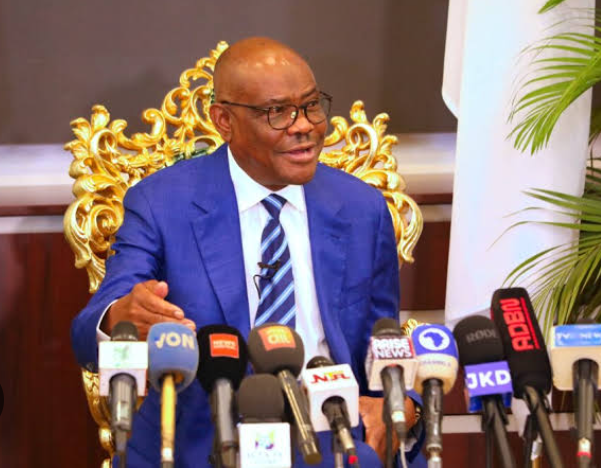
Nigeria’s already tense political atmosphere was stirred again after the Minister of the Federal Capital Territory, Nyesom Wike, delivered a sharp and characteristically blunt response to a comment attributed to Rivers State Governor, Siminalayi Fubara, popularly interpreted as “the dog is barking.” What might have sounded like a casual or dismissive remark has now escalated into another chapter of the deepening rift between the former political allies, exposing the fractures within Rivers State politics and its implications for national alignments ahead of future elections.
Speaking publicly, Wike did not shy away from addressing the comment head-on, choosing words that left little doubt about where he stands. In his response, the former Rivers governor flipped the metaphor back at Fubara, reminding both his audience and political observers of the role he claims to have played in Fubara’s rise to power. According to Wike, the “dog” being referenced had been barking long before many Rivers people even knew who Fubara was politically, insisting that it was that same force that stood firm when others retreated, ultimately ensuring Fubara’s emergence as governor.
Wike’s statement carried the familiar mix of sarcasm, bravado, and political messaging that has become his trademark. He stressed that he was not afraid of the same “dog” now barking, adding pointedly that he wished Fubara good luck. For supporters of the FCT minister, the message was clear: Wike sees himself as the political engine behind Fubara’s success and believes any attempt to belittle or dismiss his influence is both ungrateful and historically inaccurate.
The exchange comes against the backdrop of months of tension between the two men, whose relationship has deteriorated since Fubara assumed office. Once seen as Wike’s political protégé, Fubara has increasingly been perceived as charting his own course, a development that has fueled speculation about power struggles within the Rivers State political structure. The “dog is barking” remark, whether meant metaphorically or otherwise, appears to have struck a nerve, transforming simmering disagreements into open verbal combat.
Beyond the personal undertones, Wike’s remarks also carried broader political implications, particularly regarding party loyalty and future electoral strategies. In the same breath as his response to Fubara, Wike reaffirmed his commitment to working for President Bola Ahmed Tinubu, whom he referred to respectfully as Asiwaju. He emphasized that there was no ambiguity about where he and his political camp stand, declaring that they had collectively decided to support Tinubu and that there would be no going back on that decision.
This declaration is significant, especially considering Wike’s controversial role during the 2023 elections, when he openly opposed his party’s presidential candidate, Atiku Abubakar, and aligned with Tinubu of the APC. His comments suggest a determination to avoid what he described as the “mistake” made last time, hinting at internal regrets or lessons learned from previous political calculations. According to Wike, whatever errors occurred in the past would be corrected moving forward, signaling a more disciplined and strategic approach to future political battles.
Wike also took a swipe at political actors he claimed were resurfacing around Fubara, particularly those associated with Atiku Abubakar. He dismissed their relevance, arguing that they failed to deliver even 10 percent of votes for Atiku in Rivers State. Without naming names, Wike suggested that these figures offer little political advantage and should not be mistaken for power brokers. His refusal to mention them directly only added to the intrigue, as many observers believe the identities of these individuals are well known within the state’s political circles.
The remarks have sparked intense reactions across social media and political platforms, with supporters and critics dissecting every line. For Wike’s loyalists, his comments reinforce the image of a strongman politician who refuses to be sidelined or disrespected, especially by those he believes he helped elevate. To them, the “dog is barking” response was less about insults and more about asserting political seniority and influence.
On the other hand, supporters of Governor Fubara see Wike’s comments as an attempt to maintain control over Rivers politics from Abuja, arguing that the state needs space to move forward under new leadership. They view Fubara’s posture as one of independence rather than ingratitude, interpreting the controversy as a natural fallout when a successor tries to govern without excessive interference from a powerful predecessor.
Political analysts note that this public exchange is symptomatic of a larger issue in Nigerian politics, where godfatherism often clashes with the autonomy of elected officials. The Wike–Fubara dispute fits a familiar pattern in which former governors struggle to relinquish influence, while new governors seek to assert their authority. In Rivers State, however, the stakes are particularly high, given Wike’s continued relevance at the federal level and his strong grassroots network.
As the dust settles, it remains unclear whether the war of words will escalate further or give way to behind-the-scenes negotiations. What is certain is that Wike has once again reminded Nigerians that he remains a formidable political force, unafraid of confrontation and unapologetic about his choices. His message to Fubara, veiled in metaphors and political bravado, serves as both a warning and a statement of intent.
For now, Rivers State remains on edge, watching closely as two powerful figures trade words that could shape the state’s political future. Whether the “dog” will keep barking or whether both camps will eventually find common ground is a question that only time will answer. But in the unpredictable theatre of Nigerian politics, one thing is clear: when Nyesom Wike speaks, the conversation is far from over.
Popular Posts
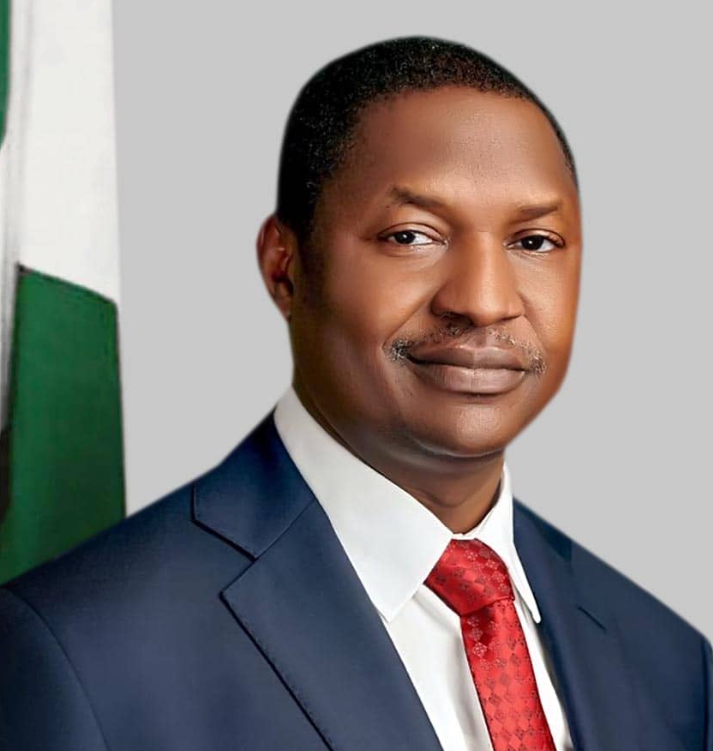
Former Attorney-General Abubakar Malami to Remain in Custody as Court Defers Bail Ruling to January 7
02 Jan, 2026
₦1.4 Trillion on the Table: How Nigeria’s Food Import Bill Exposes a Deeper Economic Dependence
02 Jan, 2026
“The Dog Is Barking”: Wike Fires Back at Fubara in a Fresh Political Storm
02 Jan, 2026Scroll to Top