Entertainment
Gabon Suspends National Team After AFCON Disaster, Sacks Coach and Freezes Aubameyang Out
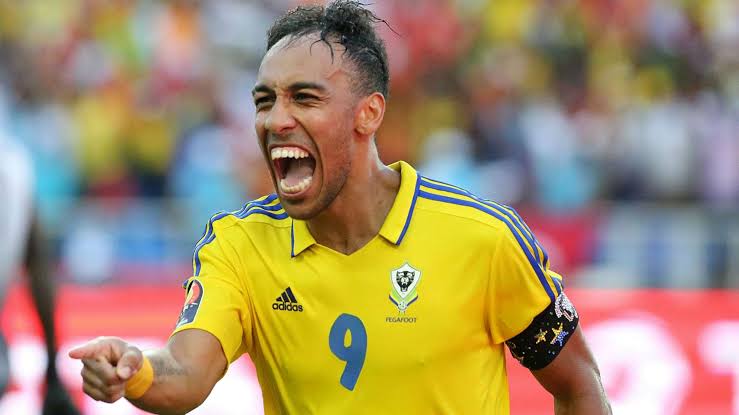
Gabonese football has been thrown into unprecedented turmoil after the country’s government announced the suspension of the national team in the aftermath of a disastrous Africa Cup of Nations campaign that ended in three consecutive defeats. What was meant to be a tournament of redemption quickly descended into a national embarrassment, forcing authorities to step in with drastic measures that have sent shockwaves across African football.
The announcement was made by Gabon’s acting Minister of Sports, Simplice-Désiré Mamboula, who confirmed that the Panthers would be suspended indefinitely following their winless AFCON outing. The decision, according to government officials, was taken after an internal review concluded that the problems plaguing the team went far beyond results on the pitch and reflected deeper structural and disciplinary failures within the setup.
In the same breath, the government sacked head coach Thierry Mouyouma, effectively bringing an abrupt end to his tenure. Mouyouma, who had been entrusted with stabilizing the team and guiding a new generation of players, instead presided over one of the worst AFCON performances in Gabon’s history. Three matches, three losses, and a visibly disjointed squad left fans furious and officials under pressure to act decisively.
Perhaps the most explosive aspect of the announcement was the declaration that team captain Bruno Ecuele Manga and Gabon’s most famous football export, Pierre-Emerick Aubameyang, will no longer be considered for selection going forward. While the government stopped short of using the word “ban,” the message was clear: an era has ended.
Aubameyang, who has carried the weight of Gabonese football on his shoulders for over a decade, did not feature in the team’s final group match defeat to hosts Ivory Coast. At the time, officials cited a thigh injury, with the striker reportedly returning to Marseille to receive treatment. However, the political fallout that followed has cast a different light on his absence, turning it into a symbol of the wider crisis engulfing the national team.
Shortly after the suspension was announced, Aubameyang took to X to defend himself in a cryptic but pointed post. “I think the team’s problems are much deeper than the individual I am,” he wrote, a statement that immediately went viral and divided opinion. To some fans, it was the voice of a frustrated leader tired of being scapegoated for systemic failures. To others, it sounded like a distancing that confirmed the breakdown between senior players and the football authorities.
Bruno Ecuele Manga’s situation appears equally final. The long-serving defender and captain has been a constant presence in the Gabon backline for years, but the government’s decision suggests that leadership within the squad is being held responsible for what officials described as a lack of cohesion, commitment, and accountability during the tournament.
The suspension of an entire national team by a government is an extraordinary move, one that underlines how seriously Gabon views the reputational damage caused by the AFCON campaign. Football holds immense cultural significance in the country, and the Panthers’ struggles have often mirrored broader frustrations with governance, planning, and investment in sports infrastructure.
Sources close to the Ministry of Sports indicate that the suspension is intended as a reset rather than a permanent shutdown. The government is expected to initiate sweeping reforms, including an audit of the football federation, a review of player selection processes, and the appointment of a new technical team once conditions are met. Until then, Gabon’s participation in international competitions remains uncertain, a situation that could have implications for future AFCON qualifiers and World Cup campaigns.
Across social media, reactions have ranged from shock to reluctant approval. Some fans argue that the drastic measures are long overdue, insisting that Gabonese football has relied too heavily on individual stars like Aubameyang while neglecting grassroots development and tactical identity. Others see the suspension as an overreach, warning that political interference could do more harm than good and permanently alienate players who have given their prime years to the national cause.
For Aubameyang, the fallout is especially poignant. Once celebrated as a national hero and the face of Gabonese football on the global stage, he now appears to be edging toward an unceremonious international exit. If the government’s stance holds, both he and Ecuele Manga may have already played their final matches for the Panthers, closing the chapter on a generation that brought Gabon some of its most memorable moments, including historic AFCON runs and global recognition.
As the dust settles, one thing is clear: Gabonese football stands at a crossroads. The suspension of the national team, the sacking of the coach, and the sidelining of its biggest stars signal not just the end of a failed AFCON campaign, but the collapse of an old order. What replaces it, and whether the country can rebuild trust, structure, and ambition from the wreckage, will determine if this moment becomes a turning point or the start of a deeper decline.
Popular Posts
Tinubu Vows Stronger Economic Dawn in 2026 as Reforms Begin to Pay Off
01 Jan, 2026
“America Lowkey Not It”: DDG’s Nigeria Safety Claim Sparks Global Debate on Perception, Reality, and the Search for a Better Life
01 Jan, 2026
“Year of Dabush Kabash” — Pastor Odumeje Declares 2026 in Viral Prophecy That Sets Social Media Ablaze
01 Jan, 2026Scroll to Top