Entertainment
“Year of Dabush Kabash” — Pastor Odumeje Declares 2026 in Viral Prophecy That Sets Social Media Ablaze
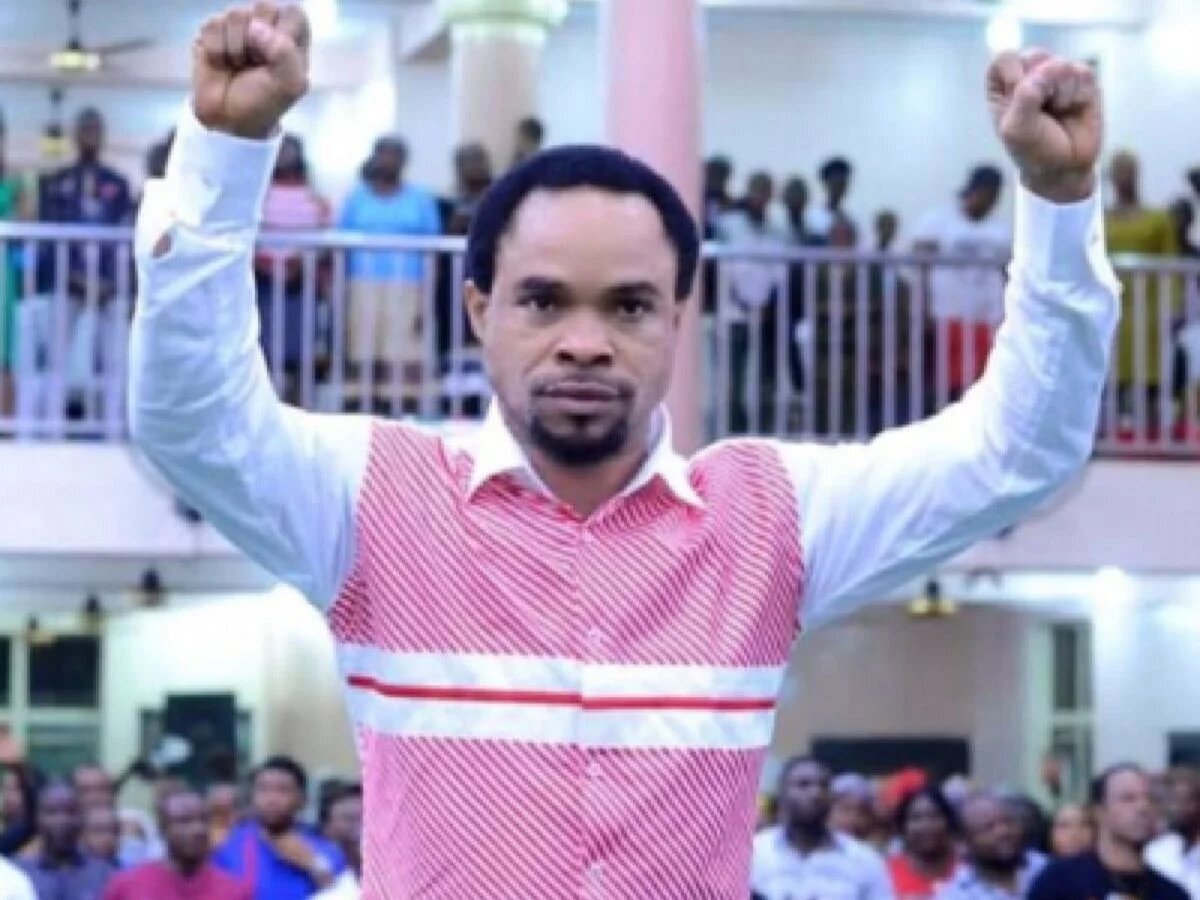
Controversial Nigerian cleric and self-styled prophet, Chukwuemeka Cyril Ohanaemere, popularly known as Pastor Odumeje or Indaboski Bahose, has once again captured national attention after declaring 2026 as the “Year of Dabush Kabash” during a high-energy church service that has since gone viral across social media platforms.
The declaration was made at the headquarters of his ministry, The Mountain of Holy Ghost Intervention Ministry, where a packed auditorium of worshippers erupted in cheers as Odumeje unleashed his trademark mix of theatrical gestures, rapid-fire chants, and spiritually charged expressions.
Clad in his usual dramatic attire, the preacher repeatedly shouted “Dabush Kabash!” while pacing the altar, describing the coming year as a season of unusual spiritual release, power shifts, and divine manifestations.
Within hours of the service, video clips from the declaration flooded X (formerly Twitter), Instagram, Facebook, and TikTok, racking up over 21,000 views and more than 100 replies in less than two hours. As expected, reactions were swift, divided, and characteristically Nigerian — blending humor, curiosity, admiration, and outright mockery.
Pastor Odumeje is no stranger to viral moments. Over the years, he has carved out a unique space in Nigeria’s crowded religious landscape by fusing Pentecostal prophecy with performance-style preaching heavily influenced by Igbo expressions, wrestling-like theatrics, and exaggerated spiritual metaphors. His sermons often feature phrases that make little literal sense but resonate symbolically with his followers, such as “Abido Shaker,” “Gburugburu,” and now, “Dabush Kabash.”
According to Odumeje, “Dabush Kabash” represents a divine spiritual collision — a forceful breakthrough that will scatter obstacles, enemies, poverty, and stagnation in the lives of believers. While he did not provide a clear theological definition of the phrase, that ambiguity has long been part of his appeal. To his followers, the power lies not in linguistic clarity but in spiritual intensity.
“This is the year where chains will break without prayer points,” Odumeje shouted during the service. “It is not the year of grammar. It is the year of Dabush Kabash!”
For supporters, the message was received with excitement and faith. Many congregants could be seen jumping, shouting, and echoing the phrase in unison, treating it as a prophetic signal of hope amid Nigeria’s ongoing economic struggles, insecurity, and social uncertainty. In a country where religion often serves as both refuge and resistance, Odumeje’s declarations tap into deep emotional and psychological needs.
However, outside the church walls, the reaction was far more playful.
On social media, Nigerians quickly turned “Dabush Kabash” into memes, skits, and jokes. Some users described Odumeje as “Nigeria’s most consistent entertainer,” while others jokingly asked if “Dabush Kabash” was a new crypto coin, a wrestling move, or a secret government policy. A popular comment read, “No matter how bad the year is, Odumeje will always give us content.”
Several users openly referred to the preacher as a comedian rather than a pastor, a label that has followed him for years. Yet even critics admit that his ability to dominate online conversations is unmatched. In an era where attention is currency, Odumeje understands the mechanics of virality better than many professional influencers.
Religious analysts note that Odumeje represents a broader shift in Nigerian Christianity, where spectacle increasingly intersects with spirituality. With social media shortening attention spans, pastors who can blend entertainment with prophecy often gain wider reach, especially among younger audiences who may not be drawn to traditional sermons.
Despite the mockery, Odumeje’s influence remains significant. His church services attract large crowds, and his videos consistently trend online. He has built a persona that thrives on controversy, refusing to conform to conventional pastoral expectations. To his followers, he is a prophet operating beyond human understanding. To his critics, he is a performer exploiting religious emotions. To the internet, he is pure content.
What is undeniable is that “Dabush Kabash” has already achieved one thing: relevance. Long before 2026 arrives, the phrase has embedded itself into Nigeria’s pop culture vocabulary, joining the long list of Odumeje-inspired expressions that live on as memes, slang, and conversation starters.
As Nigeria heads into another uncertain year marked by economic pressure, political tension, and social fatigue, figures like Odumeje continue to dominate the intersection of faith and entertainment. Whether “Dabush Kabash” becomes a genuine spiritual rallying cry for believers or simply another viral punchline remains to be seen.
But in a country where hope, humor, and hustle often coexist, Pastor Odumeje has once again proven that when it comes to commanding attention, he operates in a lane entirely his own.
And for better or worse, 2026 has already been baptized — Dabush Kabash style.
Watch the video below
“2026 is a year of Dabush Kabash.”🧎♂️🫵
— CHUKS 🍥 (@ChuksEricE) January 1, 2026
-Pastor Odumeje declares as he sets to release many pøwers. pic.twitter.com/4uRdFojLrX
Twitter Post
Visit websitePopular Posts
Tinubu Vows Stronger Economic Dawn in 2026 as Reforms Begin to Pay Off
01 Jan, 2026
“America Lowkey Not It”: DDG’s Nigeria Safety Claim Sparks Global Debate on Perception, Reality, and the Search for a Better Life
01 Jan, 2026
“Year of Dabush Kabash” — Pastor Odumeje Declares 2026 in Viral Prophecy That Sets Social Media Ablaze
01 Jan, 2026Scroll to Top