Entertainment
“Poor Man No Get Hope”: Finance Coach GehGeh Slams Nigeria’s ‘Unfair System’ After Ralph’s Arrest Sparks Online Outrage
Nigeria’s long-running debate about justice, class privilege, and selective law enforcement was reignited this week after the arrest of a man identified as Ralph over alleged online harassment involving Omotara, the wife of popular content creator Alabi Lawrenz. The incident, which has continued to dominate conversations on X (formerly Twitter) and other social media platforms, drew a sharp and emotional reaction from controversial finance coach and social commentator, GehGeh, who used the moment to question what he described as the country’s deeply unfair system.
According to reports circulating online, Ralph was arrested following accusations of online harassment linked to comments allegedly made about Omotara. While details surrounding the case remain sketchy and investigations are reportedly ongoing, the speed of the arrest quickly became the focal point of public debate. Many Nigerians online began asking familiar questions: why are some cases acted upon immediately while others, sometimes more severe, are ignored for years? Who gets protected, and who gets punished?
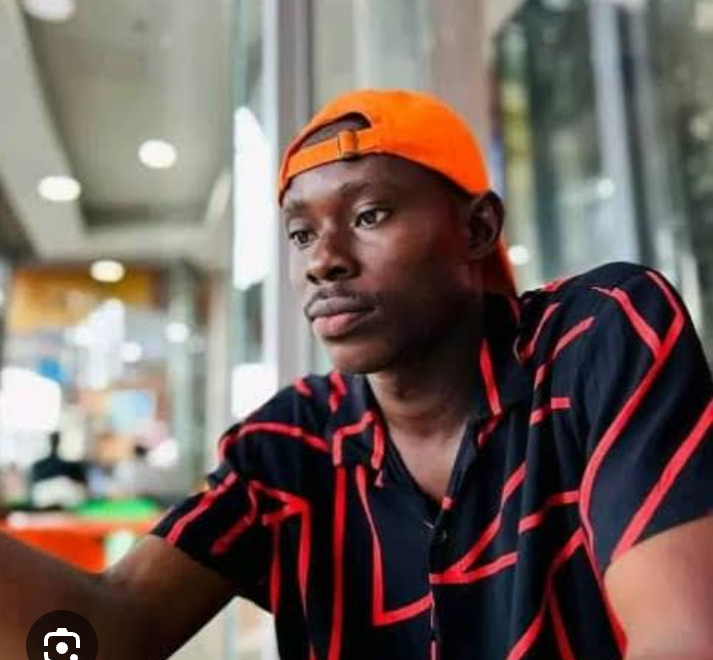
GehGeh did not hold back in his response. In a blunt post shared on his X account, he framed the situation as yet another example of how social class determines fate in Nigeria. Writing in a mix of English and Nigerian Pidgin, GehGeh suggested that whether it is government officials, middle-class individuals, or the wealthy, the system often works against the poor when power and influence come into play. His post, which quickly went viral, ended with a grim conclusion: “Poor man no get hope for Nigeria.”
The statement struck a nerve. Within hours, thousands of users were reposting, quoting, and debating GehGeh’s words. For many, his reaction captured a frustration they have carried for years. The idea that the law is not applied evenly is not new in Nigeria, but each high-profile arrest tied to social media expression seems to reopen old wounds. GehGeh’s critics accuse him of oversimplifying a complex legal issue, but his supporters argue that his message reflects lived realities that statistics and official statements often fail to capture.
At the center of the controversy is the broader issue of online harassment and free speech. In recent years, Nigeria has witnessed an increase in arrests connected to social media posts, comments, and online disputes. Supporters of stricter enforcement argue that cyberbullying and online harassment cause real harm and should have consequences. Others counter that enforcement appears selective, often targeting individuals without influence while powerful figures accused of similar or worse behavior rarely face public accountability.
GehGeh’s post explicitly touched on this perceived double standard. He implied that actions many Nigerians have seen public figures “confess” to offline or online in the past did not result in arrests, raising questions about why this particular case moved so quickly. While he did not defend online harassment, his focus was squarely on what he sees as unequal consequences based on status rather than principle.
The reaction online has been deeply divided. Some users argued that Ralph’s arrest, if the allegations are proven, sends a necessary message about accountability in the digital space. They insist that harassment should never be normalized, regardless of who the victim is. From this perspective, the arrest is not evidence of injustice but of progress in taking online abuse seriously. Others, however, say the problem is not enforcement itself but inconsistency. They point to countless examples where ordinary Nigerians claim their cases were ignored or dismissed, even when evidence was available.
Alabi Lawrenz and his wife Omotara have also been pulled into the storm of public opinion, with many urging caution and calling for due process. While sympathy for victims of harassment remains strong, there is also a growing discomfort with how quickly social media outrage can translate into police action without full public clarity. Legal experts and activists have reminded the public that allegations remain allegations until tested in court, urging restraint on all sides.
GehGeh’s involvement added fuel to the fire because of his reputation as a provocateur who often speaks in extremes to make his point. Known for his unapologetic commentary on money, power, and survival in Nigeria, he has built a following by articulating what many see as uncomfortable truths. To his fans, his reaction was not about Ralph alone but about a system that repeatedly appears to favor those with connections while leaving the poor exposed.
The phrase “Poor man no get hope” began trending shortly after his post, with users sharing personal stories of encounters with law enforcement, unresolved complaints, and perceived injustices. Some recounted cases of fraud, assault, or land disputes that went nowhere because they lacked the resources to “push” their case. In that sense, Ralph’s arrest became symbolic, less about one man and more about a broader national frustration.
Still, there are those who warn against turning every arrest into a class war narrative. They argue that doing so risks undermining genuine efforts to address harmful online behavior. For them, the solution lies not in excusing alleged misconduct but in demanding that the same standards be applied consistently, regardless of wealth or social standing.
As the case unfolds, Nigerians continue to watch closely, not just for its legal outcome but for what it represents. Will the matter be handled transparently? Will due process be followed? And perhaps most importantly, will this energy for enforcement be extended to all, or will it fade once public attention moves on?
For GehGeh, the answer already seems clear. His reaction was less a legal analysis and more a social verdict, reflecting years of accumulated distrust in institutions meant to protect everyone equally. Whether one agrees with his tone or not, his words have once again forced a national conversation that refuses to go away.

In a country where social media has become both a courtroom and a battleground, the line between justice and influence remains blurry. Ralph’s arrest, the allegations surrounding it, and GehGeh’s explosive reaction have combined to expose old anxieties about power, poverty, and fairness. As Nigerians debate, argue, and reflect, one thing is certain: the question of who truly has hope in Nigeria is far from settled.
Popular Posts
“Poor Man No Get Hope”: Finance Coach GehGeh Slams Nigeria’s ‘Unfair System’ After Ralph’s Arrest Sparks Online Outrage
18 Dec, 2025
Football Silenced by Gunfire: Ecuador Mourns Mario Pineida After Shocking Killing in Guayaquil
18 Dec, 2025
“I Chose Purpose Over Perfection”: Tonto Dikeh Removes BBL After Giving Her Life to Christ
18 Dec, 2025Scroll to Top